Parasite SEO has emerged as one of the most controversial and misunderstood strategies in modern search engine optimization. In an era where Google rankings are harder to achieve, competition is intense, and AI-driven search is reshaping how content is discovered, many marketers are looking for faster ways to gain visibility.
This is where Parasite SEO enters the conversation.
Some digital marketers see Parasite SEO as a smart growth accelerator—a way to leverage the authority of established platforms to rank quickly. Others warn that it’s a dangerous shortcut that can collapse overnight and damage brand credibility.
So which is it?
Is Parasite SEO an ethical growth strategy, or is it a short-term trap that eventually backfires?
In this comprehensive guide, we will explore Parasite SEO from every angle—what it is, how it works, why it became popular, its advantages, risks, ethical boundaries, comparison with traditional SEO, its role in AI-driven search, best practices, mistakes to avoid, and its future beyond 2025.
What Is Parasite SEO?
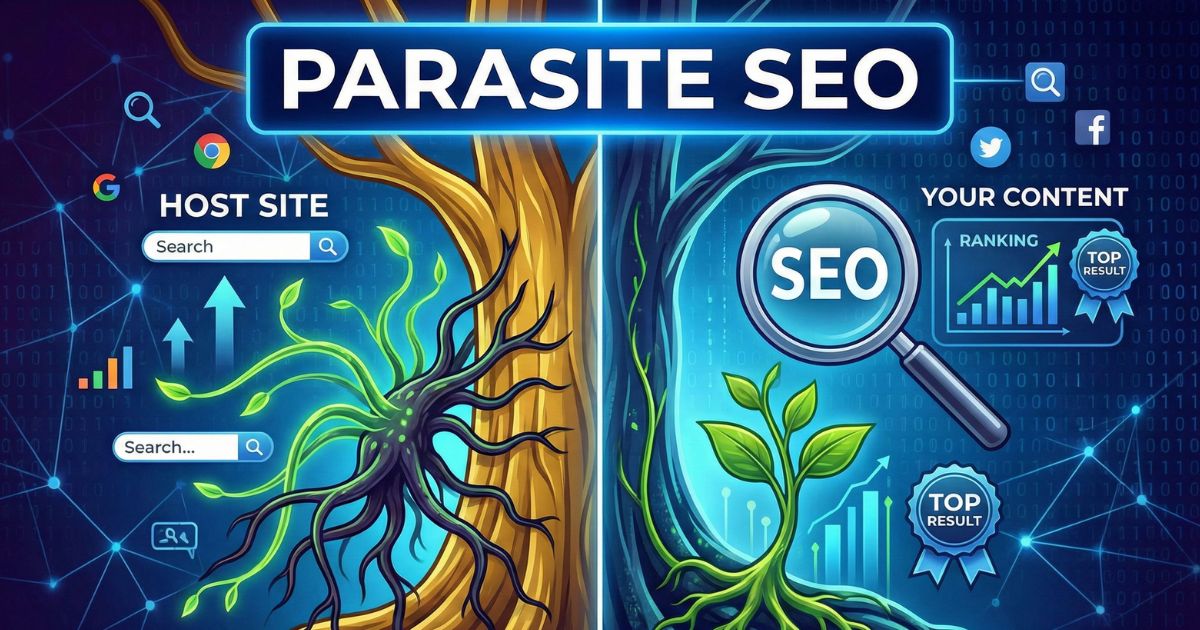
Parasite SEO is a digital marketing strategy where content is published on high-authority third-party websites with the goal of ranking faster on search engines. Instead of building authority on a new or low-authority domain, marketers “borrow” authority from platforms that already have strong trust signals.
These platforms typically have:
-
High domain authority
-
Strong backlink profiles
-
Fast indexing by search engines
-
Established user trust
-
Consistent organic traffic
By publishing optimized content on these platforms, marketers can often rank for competitive keywords much faster than they could on their own websites.
The term “parasite” comes from the idea that the content feeds off the host platform’s authority—but the effectiveness depends entirely on how it’s executed.
How Parasite SEO Works (Step-by-Step)
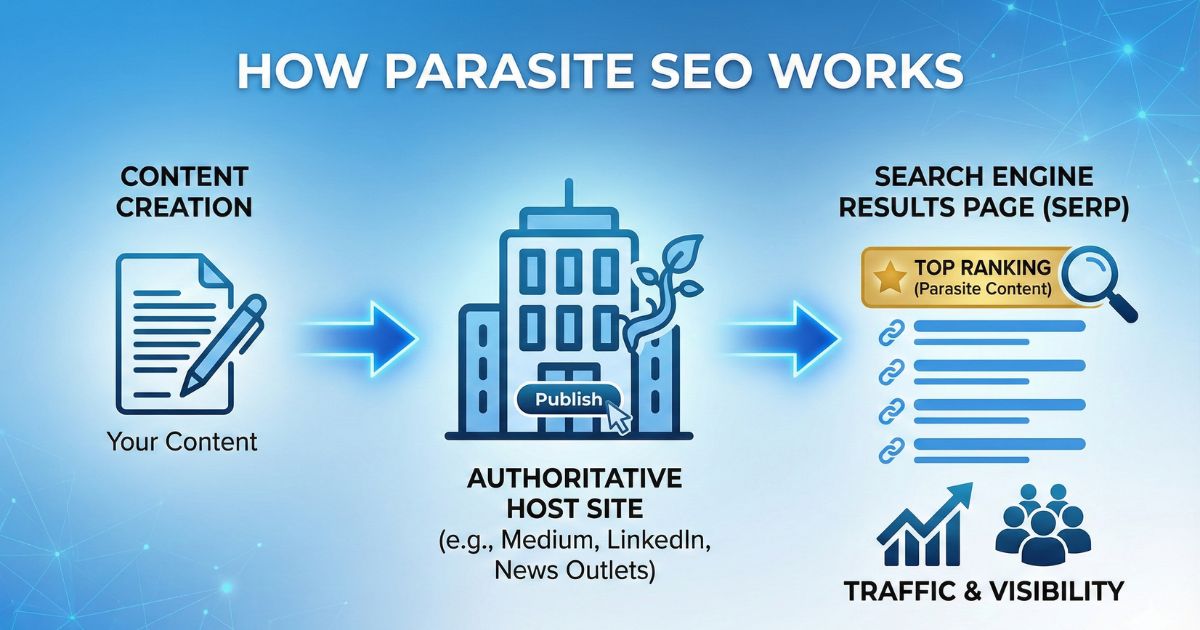
Parasite SEO is not random posting. When done properly, it follows a structured process:
Step 1: Keyword & Intent Research
Marketers identify keywords that are:
-
Highly competitive
-
Difficult to rank for on new domains
-
Commercial, informational, or reputation-sensitive
Search intent plays a crucial role. Parasite SEO works best for informational and comparative queries, though it’s also used for branded and reputation-related searches.
Step 2: Platform Selection
Not all high-authority platforms work the same way. The platform must:
-
Allow content publishing or sponsored placement
-
Be indexed quickly by Google
-
Match the topic’s relevance
Step 3: Content Optimization
The content is optimized using:
-
Proper heading structure (H1–H3)
-
Clear topical depth
-
Internal links (where allowed)
-
Natural brand mentions
Step 4: Publishing & Indexing
Once published, the content benefits from:
-
The platform’s crawl budget
-
Existing authority
-
Faster SERP entry
Step 5: Visibility & Brand Leverage
The ranked content may:
-
Drive traffic directly
-
Support brand credibility
-
Push down negative search results
-
Funnel users to owned assets
Common Parasite SEO Platforms
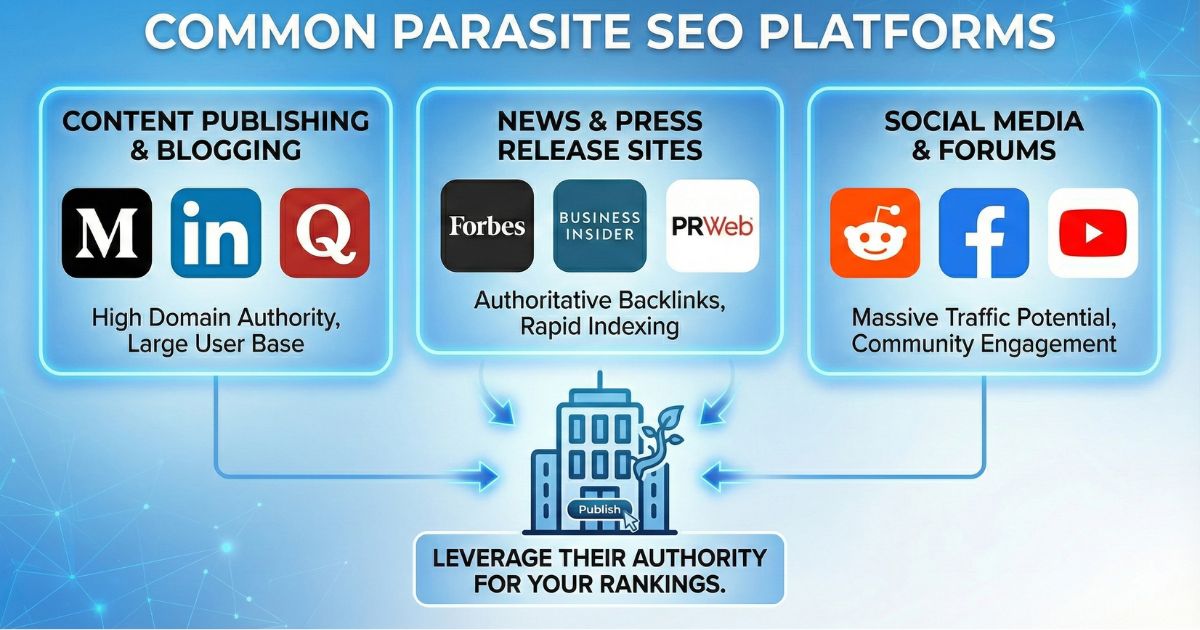
| Platform | Authority Level | SEO Risk | Best Use Case |
|---|---|---|---|
| Medium | High | Medium | Thought leadership |
| LinkedIn Articles | High | Low | Personal branding |
| Quora | High | Medium | Question-based SEO |
| Very High | High | Trend discovery | |
| News Portals | Very High | Low (paid) | Reputation management |
| Blogger.com | Medium | Medium | Niche testing |
| Substack | Medium–High | Low | Expert commentary |
Each platform has different editorial rules, risk levels, and longevity.
Why Parasite SEO Became So Popular
Parasite SEO gained popularity due to major shifts in the SEO landscape.
1. Increased Competition
Ranking organically now requires:
-
Strong authority
-
High-quality backlinks
-
Consistent content investment
New websites struggle to compete with established brands.
2. Slower Traditional SEO Results
Traditional SEO can take:
-
3–6 months for traction
-
6–12 months for the authority
Parasite SEO offers faster visibility.
3. Rising SEO Costs
Link building, PR, and content costs have increased, making shortcuts attractive.
4. Reputation Management Demand
Professionals, executives, doctors, and public figures often need fast control over search results, where Parasite SEO excels.
Benefits of Parasite SEO

1. Rapid Rankings
One of the biggest advantages is speed. Parasite SEO can rank content within days or weeks.
2. Leverages Established Trust
You benefit from the host platform’s:
-
Authority
-
Brand recognition
-
User trust
3. Useful for Reputation Control
Positive authoritative content can suppress negative search results effectively.
4. Lower Barrier to Entry
You don’t need a strong backlink profile or an aged domain.
5. Ideal for Short-Term Campaigns
Parasite SEO works well for:
-
Product launches
-
Event promotions
-
Announcements
-
Market validation
Parasite SEO vs Traditional SEO (Comparison Table)
| Aspect | Parasite SEO | Traditional SEO |
|---|---|---|
| Speed | Very fast | Slow |
| Ownership | No | Yes |
| Control | Limited | Full |
| Risk | High | Low |
| Brand Building | Weak | Strong |
| Scalability | Limited | High |
| Long-Term ROI | Low | High |
| AI/GEO Readiness | Moderate | Strong |
The Dark Side of Parasite SEO
Despite its benefits, Parasite SEO carries significant risks.
1. No Ownership
Your content exists on someone else’s platform. It can be removed at any time.
2. Platform Dependency
Policy updates, monetization changes, or moderation decisions can destroy visibility overnight.
3. Limited Brand Equity
Users often remember the platform—not your brand.
4. Risk of Penalties
Aggressive keyword targeting, spam links, and affiliate abuse can trigger Google penalties.
5. Unsustainable Long-Term Growth
Once rankings drop, traffic often disappears instantly.
Is Parasite SEO Ethical?
Parasite SEO is not inherently unethical. The ethics depend on intent and execution.
Ethical Parasite SEO
-
High-quality, helpful content
-
Transparent branding
-
Compliance with platform rules
-
Educational or informational value
Unethical Parasite SEO
-
Spam content
-
Misleading narratives
-
Fake news
-
Cloaked affiliate links
-
Mass-produced AI junk
Ethical Parasite SEO focuses on value creation, not manipulation.
When Parasite SEO Makes Sense
Parasite SEO works best when:
-
You need fast visibility
-
You’re managing reputation risks
-
You’re testing keywords or markets
-
You’re supporting PR campaigns
-
You’re targeting extremely competitive keywords
It should always be a supporting strategy, not the foundation.
When Parasite SEO Becomes a Trap
Parasite SEO becomes dangerous when:
-
It replaces owned SEO entirely
-
You rely on one platform
-
You build no brand assets
-
You ignore long-term strategy
-
You chase shortcuts over trust
Many affiliate sites collapse due to this over-reliance.
Parasite SEO in the Age of AI & GEO
AI-driven search has changed everything.
Search engines now prioritize:
-
Brand authority
-
Consistent identity
-
Expert-backed content
-
Trust signals
-
Entity recognition
Generative Engine Optimization (GEO) rewards brands—not just pages.
Parasite SEO can still support visibility, but without:
-
Owned content
-
Brand authority
-
Entity signals
Its effectiveness declines sharply.
Parasite SEO Best Practices (Sustainable Approach)
Best Practices:
-
Focus on quality, not volume
-
Match content to the platform audience
-
Use Parasite SEO to support owned SEO
-
Maintain consistent brand mentions
-
Track rankings and content health
-
Combine with digital PR
Common Parasite SEO Mistakes to Avoid
-
Publishing thin content
-
Over-optimizing keywords
-
Ignoring platform rules
-
Relying on one site only
-
Treating Parasite SEO as permanent
The Future of Parasite SEO (2026 & Beyond)
Parasite SEO is evolving.
It is shifting from:
❌ Ranking manipulation
➡️ Authority reinforcement
Brands that integrate Parasite SEO into:
-
Thought leadership
-
Reputation management
-
GEO strategies
will continue to benefit.
Those who abuse it will disappear.
Frequently Asked Questions (FAQ)
What is Parasite SEO in simple terms?
Parasite SEO means ranking content on high-authority websites instead of your own site to gain faster visibility.
Is Parasite SEO safe?
Yes, when used ethically and moderately. Spam tactics are risky.
Does Parasite SEO still work in 2025?
Yes, but it works best as a supporting strategy, not alone.
Is Parasite SEO black-hat?
Ethical Parasite SEO is grey-hat. Manipulative use is black-hat.
Can Parasite SEO help with reputation management?
Yes, it’s widely used to suppress negative content.
Should startups use Parasite SEO?
Yes—but temporarily and alongside owned SEO assets.
Final Verdict: Ethical Growth or Short-Term Trap?
Parasite SEO is a tool—not a long-term strategy.
✔ Used ethically → Growth accelerator
✘ Used aggressively → Short-term trap
The future belongs to brands that invest in:
-
Owned content
-
Authority
-
Trust
-
AI & GEO-ready SEO
Parasite SEO can amplify visibility—but true power comes from assets you control.