A strong online brand presence is essential for businesses that want to build customer trust and maintain long-term credibility. Before choosing a company, customers often search for its name, read reviews, explore social media profiles, and look at information appearing in search results. When negative or misleading content dominates these digital spaces, it can influence how people perceive the brand.
This is where Negative Content Management becomes an important part of digital reputation management. Rather than simply reacting to individual negative posts, businesses can use a structured approach to identify reputation risks, evaluate harmful content, respond appropriately, and strengthen the overall quality of their online presence.
Negative content can appear in many forms. It may include inaccurate articles, unfair reviews, outdated information, negative discussions, misleading claims, or damaging search results. Not every negative mention requires the same response, and some content may be legitimate criticism that should be addressed rather than removed. Professional management focuses on understanding the situation and choosing an appropriate strategy.
For businesses looking to strengthen their digital reputation, SanMo BD provides reputation-focused solutions designed to help organizations manage challenging online content and build a more trustworthy brand presence.
Understanding Negative Content Management
Negative Content Management refers to the strategic process of identifying, evaluating, responding to, and managing online content that may negatively affect a business or individual’s reputation.
The objective is not simply to make every negative mention disappear. In many situations, removal may not be possible or appropriate. Instead, the focus can be on addressing legitimate concerns, correcting inaccurate information, managing harmful content through suitable channels, and strengthening positive and relevant digital assets.
What Counts as Negative Online Content?
Negative online content can take many forms. A critical customer review may raise concerns about service quality, while an inaccurate article could present incorrect information about a company. Social media posts, forum discussions, outdated pages, misleading claims, and negative search results can also contribute to reputation challenges.
The potential impact depends on several factors, including the visibility of the content, its accuracy, how widely it is being discussed, and whether it appears when people search for the brand.
Why Negative Content Can Affect Brand Perception
People often form initial opinions based on the information they find online. If the first results associated with a business contain negative or misleading information, potential customers may hesitate before making contact.
Even when a business has a strong track record, highly visible negative content can create uncertainty. Managing the overall digital presence helps businesses ensure that customers can access accurate, relevant, and useful information when researching the brand.
How Negative Content Management Supports Online Reputation
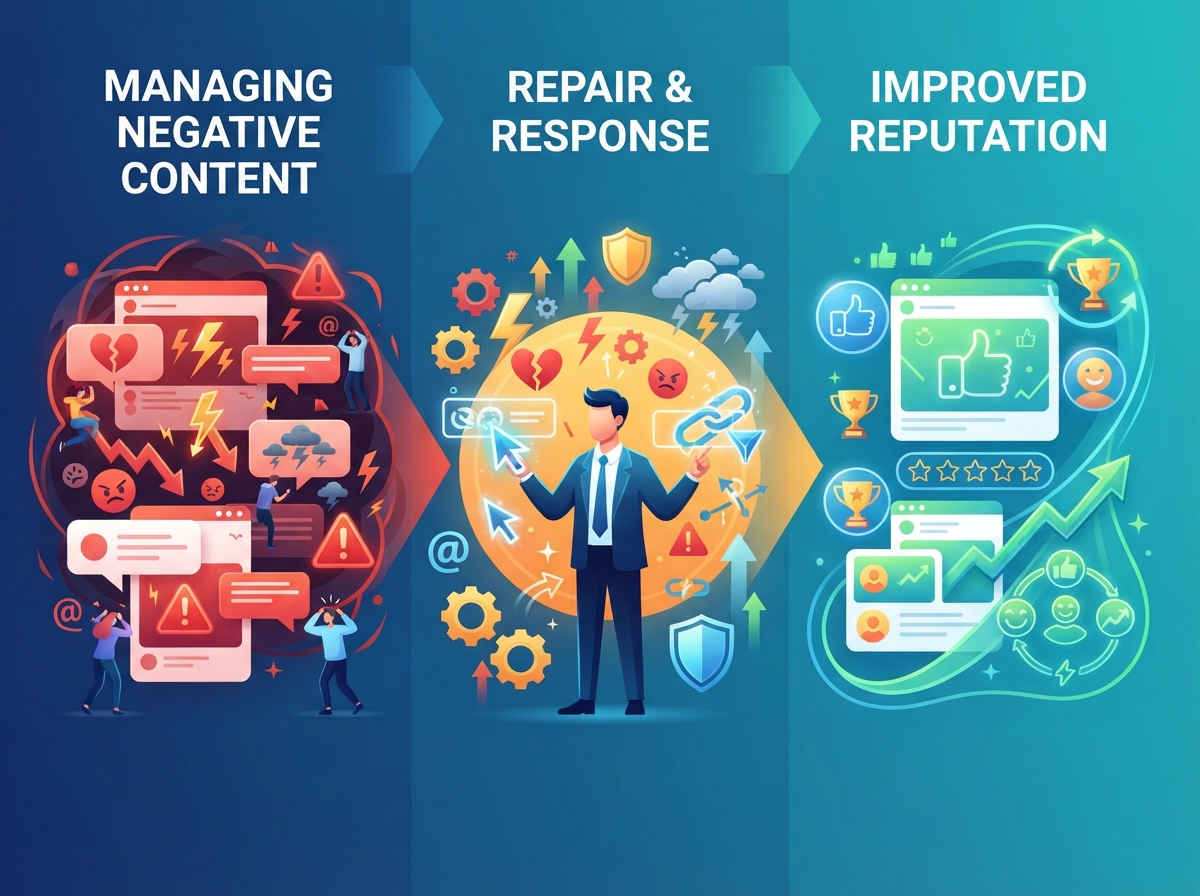 Effective reputation management begins with understanding what is already being said about a business. Without proper monitoring, companies may not know which pieces of content are influencing public perception.
Monitoring Brand Mentions
Regular monitoring helps businesses discover conversations and content connected to their brand. Search engines, review platforms, social networks, websites, forums, and digital publications can all contain information that affects reputation.
By monitoring these sources, businesses can identify emerging concerns before they become larger problems. Early awareness also gives organizations more time to determine whether a response is necessary.
Evaluating the Content
Not every negative statement has the same level of importance. Professional Negative Content Management involves examining the context and potential impact of each issue.
For example, an isolated opinion may require a different approach than a widely visible article containing inaccurate claims. Similarly, a genuine customer complaint may need customer service attention rather than a reputation-focused response. This evaluation helps businesses avoid unnecessary reactions while giving serious issues the attention they deserve.
Managing Negative Search Results
Search engines play an important role in online reputation. When potential customers search for a company, the information appearing on the first page can influence their expectations.
Understanding Search Visibility
Negative content can become particularly concerning when it ranks prominently for branded searches. A customer who searches for a business name may encounter negative information before seeing the company’s official website or other useful resources.
Negative Content Management can involve monitoring branded search results and developing strategies to strengthen the visibility of accurate, useful, and relevant content.
Strengthening Positive Digital Assets
Businesses often have valuable digital assets that can communicate their expertise and credibility. Company websites, professional profiles, informative articles, social media pages, news coverage, and other legitimate resources can contribute to a stronger online presence.
Creating and maintaining high-quality content can help provide audiences with more balanced information about the organization. Over time, a well-managed digital presence can support the visibility of trustworthy brand information.
Responding to Negative Content Professionally
 The way a business responds to criticism can be just as important as the original negative content. An emotional or aggressive response may attract additional attention and potentially make the situation more difficult.
Responding to Legitimate Complaints
When negative content reflects a genuine customer experience, the most useful response may involve addressing the underlying concern. Businesses can acknowledge the issue, provide appropriate assistance, and demonstrate that customer feedback is taken seriously. A professional response can sometimes turn a difficult interaction into an opportunity to demonstrate responsible customer service.
Addressing Inaccurate Information
If online content contains factual inaccuracies, businesses may consider appropriate channels for requesting corrections. The exact approach depends on the platform, publisher, type of content, and circumstances.
The response should remain factual and professional. Unsupported accusations or aggressive communication can create additional reputation risks.
The Connection Between Content and Brand Trust
Trust is built through consistent experiences and credible information. A business that maintains an accurate and informative digital presence gives customers more opportunities to understand its products, services, expertise, and values.
Creating More Useful Brand Information
High-quality content can help businesses communicate directly with their audiences. Educational articles, service pages, company information, case studies, announcements, and other relevant resources can provide context that may be missing from third-party discussions. The purpose is not to hide legitimate criticism but to ensure that customers have access to reliable information from credible sources.
Maintaining Consistency Across Platforms
Inconsistent information can create confusion. Business names, descriptions, services, contact information, and brand messaging should remain reasonably consistent across important digital platforms.
A coordinated online presence makes it easier for customers to recognize official brand information and distinguish it from unrelated or inaccurate sources.
How SanMo BD Supports Negative Content Management
Businesses dealing with online reputation challenges may benefit from professional support, particularly when negative content appears across multiple platforms.
SanMo BD focuses on reputation management solutions that can help businesses address online reputation concerns through structured strategies. Instead of treating every negative mention as an isolated problem, a broader approach considers how different pieces of online content contribute to the overall perception of the brand.
A Strategic Approach to Reputation Challenges
Every reputation issue is different. The appropriate strategy depends on the type of content, its visibility, accuracy, source, and potential impact.
SanMo BD can help businesses approach these challenges with a reputation-focused strategy that considers both immediate concerns and long-term online presence.
Supporting Long-Term Brand Visibility
Managing negative content should not be limited to a single incident. Businesses can continue strengthening their digital presence through relevant content, accurate information, consistent communication, and responsible reputation monitoring.
This long-term approach can help create a more balanced digital environment where customers can discover useful information about the brand.
Why Proactive Negative Content Management Matters
Waiting until negative content becomes highly visible can make reputation challenges more difficult to manage. Proactive monitoring allows businesses to identify potential problems earlier.
Detecting Reputation Risks Early
Regular monitoring can reveal new negative discussions, reviews, articles, or mentions before they gain significant visibility. Businesses can then determine whether the issue requires a response or continued observation.
Early detection is especially valuable for companies that operate in highly competitive industries where online reputation can influence purchasing decisions.
Reducing Unexpected Reputation Problems
A proactive approach does not guarantee that negative content will never appear. Instead, it gives businesses a better understanding of their online environment and helps them prepare appropriate responses. Having established monitoring and communication processes can make reputation challenges easier to manage when they occur.
Building a Stronger Online Brand Presence
 Negative Content Management works best when it is combined with broader reputation-building activities. A business should not focus exclusively on negative information.
Publishing Accurate and Relevant Content
Regularly publishing useful content can help businesses demonstrate expertise and provide customers with trustworthy information. Website articles, educational resources, company updates, and service-related content can all contribute to a stronger digital footprint.
Content should be genuinely useful rather than created solely to influence search results. Quality, relevance, and accuracy remain important for building sustainable online visibility.
Encouraging Positive Customer Experiences
Online reputation is closely connected to real customer experiences. Improving communication, customer service, product quality, and service delivery can naturally contribute to more positive feedback.
Reputation management should therefore work alongside genuine improvements within the business. Digital strategies are most effective when they reflect the actual quality of the organization.
Measuring the Impact of Reputation Management
Businesses need to understand whether their reputation efforts are producing meaningful changes. Monitoring search visibility, brand mentions, reviews, engagement, and other relevant indicators can provide useful insights.
Tracking Changes in Online Visibility
Changes in branded search results can show how the digital environment surrounding a company is evolving. Businesses can monitor whether accurate and relevant content is becoming easier for audiences to find. However, search results can change for many reasons, so individual fluctuations should be considered within a broader context.
Reviewing Customer Feedback
Customer reviews and direct feedback can provide another perspective on brand perception. Tracking recurring concerns can help businesses identify areas where communication or service improvements may be needed. Combining reputation monitoring with customer feedback creates a more complete understanding of the brand’s online reputation.
Long-Term Benefits of Negative Content Management
Effective reputation management is not only about dealing with today’s problem. It can also help businesses develop stronger processes for managing future reputation challenges.
A consistent approach can improve awareness of online conversations, encourage better communication practices, and help organizations respond more thoughtfully when problems arise.
For growing businesses, maintaining a healthy online presence can also support customer confidence, business partnerships, recruitment, and other areas where reputation matters.
Conclusion
Online reputation can influence how customers perceive a business before they ever interact with it. Negative articles, reviews, misleading information, and unfavorable discussions can create challenges when they become highly visible in search results or across digital platforms.
Negative Content Management provides businesses with a structured way to identify, evaluate, and manage these reputation challenges. Instead of reacting emotionally to every negative mention, businesses can monitor their digital environment, address legitimate concerns, respond appropriately to inaccurate information, and strengthen the visibility of useful and trustworthy content.
For businesses seeking professional reputation support, SanMo BD offers reputation-focused solutions designed to help manage online challenges and build a stronger digital brand presence. With proactive monitoring, strategic communication, quality content, and long-term reputation management, businesses can work toward creating a more credible and balanced online identity.
Frequently Asked Questions
1. What is Negative Content Management?
Negative Content Management is the process of monitoring, evaluating, responding to, and managing online content that may negatively affect a brand’s reputation. It can involve reputation monitoring, communication, correction requests, and broader reputation-building strategies.
2. Why is Negative Content Management important?
Negative online information can influence customer perceptions, particularly when it appears prominently in search results. Professional management helps businesses understand reputation risks and develop appropriate strategies for addressing them.
3. Can all negative content be removed?
No. Removal depends on the platform, content type, circumstances, and applicable policies. Some content may be better addressed through a response, correction request, or broader reputation management strategy.
4. Does Negative Content Management involve deleting reviews?
Not necessarily. Genuine customer feedback should generally be addressed professionally rather than simply treated as something to eliminate. Reputation management can involve responding to legitimate concerns and improving the underlying customer experience.
5. How does negative content affect search results?
Highly visible negative content can influence what people see when searching for a business. This may affect first impressions and customer confidence, which is why monitoring branded search results can be an important part of reputation management.
6. How can businesses respond to inaccurate online information?
Businesses can evaluate the content, gather supporting facts, and use appropriate communication or correction channels. The response should remain professional, factual, and proportionate to the situation.
7. Can positive content help improve online brand presence?
High-quality, accurate, and relevant content can provide audiences with useful information about a business. Maintaining legitimate digital assets can contribute to a stronger and more balanced online presence.
8. Is Negative Content Management only for large companies?
No. Businesses of different sizes can experience online reputation challenges. Small businesses can also benefit from monitoring brand mentions and maintaining accurate, trustworthy digital information.
9. How long does reputation management take?
The timeframe varies depending on the amount, visibility, type, and source of negative content. Some issues may require short-term communication, while broader reputation challenges can require ongoing monitoring and long-term management.
10. How can SanMo BD help with Negative Content Management?
SanMo BD provides reputation management solutions designed to help businesses address online reputation challenges. Its services can support monitoring, strategic reputation management, content-related efforts, and longer-term brand reputation improvement.