Search has never been static, but the pace of change we are experiencing today is unprecedented. Over the past decade, search engines have evolved from simple keyword-matching systems into complex, intelligent platforms capable of understanding language, intent, and credibility. The Future of Search is being shaped by artificial intelligence, machine learning, voice technology, and generative answers—and this transformation is fundamentally changing how businesses are discovered online.
For businesses, this shift is not just a technical update; it is a strategic turning point. Traditional SEO tactics that once guaranteed visibility—such as keyword stuffing, backlink quantity, and basic on-page optimization—are no longer enough. Search engines now prioritize trust, authority, and real-world experience. Brands that fail to adapt risk losing visibility, credibility, and customers, even if they have invested heavily in SEO in the past.
Understanding the future of search is about more than rankings. It is about preparing your business to be understood, trusted, and recommended by AI-powered search systems that increasingly act as decision-makers for users. Those who prepare now will build sustainable visibility, while those who delay will find it increasingly difficult to compete.
Understanding the Future of Search in the AI Era
At its core, the future of search is driven by a shift from information retrieval to answer generation. In the past, search engines displayed a list of links and left it to users to decide which result to trust. Today, AI-powered systems analyze vast amounts of data, evaluate credibility, and present summarized answers directly to users.
Search engines now focus on:
-
Understanding intent, not just keywords
-
Identifying entities such as businesses, brands, and people
-
Evaluating trust signals and authority
-
Delivering contextual and personalized answers
This evolution means that search engines are no longer neutral directories. They actively shape user decisions by deciding which brands to highlight and which to ignore. Businesses must therefore optimize not only their websites, but their entire digital footprint, including brand mentions, reviews, structured data, and content accuracy.
Why the Future of Search Matters More Than Ever for Businesses

Businesses that underestimate the future of search often assume that traditional SEO will continue to work indefinitely. In reality, AI-driven search experiences are already influencing purchasing decisions, brand trust, and customer journeys across industries.
When AI recommends a business, users perceive it as a vetted and trustworthy option. This perceived endorsement can significantly impact conversions, especially in competitive markets. Conversely, businesses that are not recognized or trusted by AI may become invisible, regardless of how good their products or services are.
Another critical factor is competition. AI search tends to surface fewer results, concentrating attention on a limited number of trusted sources. This creates a high-stakes environment where authority compounds over time. Early adopters of AI-focused optimization gain a lasting advantage, while late adopters struggle to break into AI-generated recommendations.
Artificial Intelligence as the Foundation of the Future of Search
Artificial intelligence is the single most influential force shaping the future of search. Modern search engines rely on advanced language models to understand queries, interpret context, and generate human-like responses. Instead of simply matching keywords, AI evaluates meaning, relevance, and trustworthiness.
Generative AI has introduced a new dynamic where search engines:
-
Summarize information from multiple sources
-
Provide direct recommendations
-
Answer complex, multi-part questions
-
Reduce the need for users to click through multiple pages
For businesses, this means content must be accurate, comprehensive, and authoritative. AI systems are designed to detect inconsistencies, exaggerations, and low-quality information. Brands that publish shallow or misleading content risk being excluded from AI-generated results altogether.
The Rise of Conversational and Voice Search
Voice assistants and conversational interfaces are becoming a central part of the future of search. Users are increasingly interacting with search engines through spoken queries on smartphones, smart speakers, and even vehicles. These queries are longer, more natural, and more intent-driven than traditional text searches.
For example, instead of searching “best accountant,” users may ask:
-
“Which accountant is best for small businesses near me?”
-
“Who can help me with tax filing this year?”
This shift requires businesses to rethink how they structure content. Pages that clearly answer real questions, provide concise explanations, and use natural language are far more likely to be selected by AI systems for voice responses. In voice search, there is often only one answer, making competition even more intense.
Zero-Click Searches and the Changing Value of Traffic
One of the most disruptive elements of the future of search is the rise of zero-click searches. In these scenarios, users receive the information they need directly on the search results page through featured snippets, AI summaries, or knowledge panels.
While this reduces website traffic, it increases the importance of brand visibility and authority. Being cited in an AI-generated answer builds trust and recognition, even if users do not visit your website. Over time, this visibility influences brand recall and purchasing decisions.
Businesses must adapt by creating content that is:
-
Easy to extract and summarize
-
Structured with clear headings
-
Focused on answering specific questions
-
Factually accurate and up to date
In the future, visibility will be measured not just by clicks, but by mentions and recommendations.
E-E-A-T: The Core Signal in the Future of Search
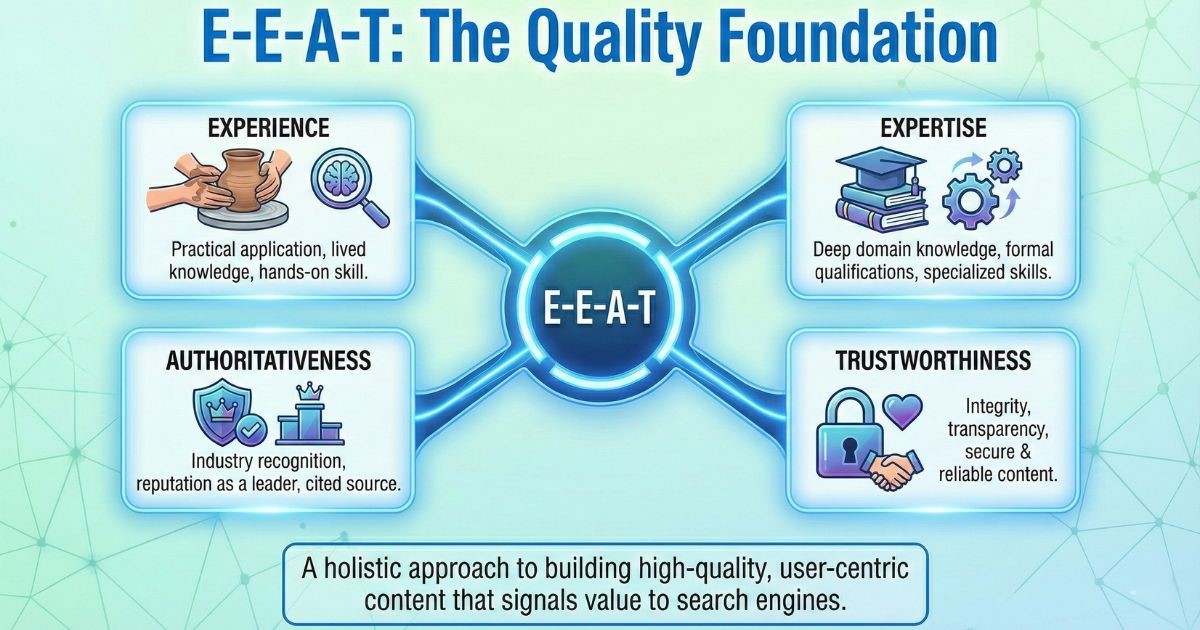
Experience, Expertise, Authoritativeness, and Trustworthiness—collectively known as E-E-A-T—form the backbone of the future of search. AI systems rely on these signals to determine which content and brands deserve attention.
To strengthen E-E-A-T, businesses should:
-
Share real-world experiences, case studies, and examples
-
Demonstrate subject-matter expertise through in-depth content
-
Build authority via mentions, citations, and partnerships
-
Establish trust through transparency, reviews, and consistency
Search engines increasingly prioritize content created by people and businesses with genuine experience. Generic or purely AI-generated content without human oversight is unlikely to perform well in the long term.
The Importance of Structured Data and Technical Clarity
Structured data plays a critical role in the future of search by helping AI systems understand content more accurately. Schema markup provides explicit signals about what a page represents, reducing ambiguity and improving eligibility for enhanced search features.
Common schema types businesses should consider include:
-
Article
-
FAQ
-
Organization
-
LocalBusiness
-
Product or Service
Proper implementation of structured data improves how content is interpreted, displayed, and recommended. It also increases the likelihood of appearing in AI summaries and voice search results.
Personalization and Contextual Search Experiences
Personalization is becoming increasingly central to the future of search. AI systems tailor results based on user behavior, location, device, and preferences. This means that search results may vary significantly from one user to another.
Businesses must therefore create content that addresses multiple contexts and intents. Informational content supports early-stage users, while detailed service pages and comparisons help users closer to making decisions. The more context-aware your content is, the more likely it is to be surfaced by AI systems at the right moment.
Preparing Your Business for the Future of Search
Preparing for the future of search requires a strategic shift in mindset. Businesses must move beyond chasing rankings and focus on becoming trusted entities within their industries.
Key preparation steps include:
-
Conducting a content audit to identify gaps and outdated information
-
Updating content with expert insights and real examples
-
Building a consistent brand presence across authoritative platforms
-
Optimizing for conversational, question-based queries
-
Implementing structured data across key pages
-
Encouraging and managing authentic customer reviews
These actions help establish credibility and ensure AI systems can confidently reference your brand.
Common Mistakes That Can Hurt Visibility
Many businesses struggle with the future of search because they continue using outdated tactics. Common mistakes include keyword stuffing, relying solely on backlinks, publishing low-quality AI-generated content, and ignoring trust signals.
AI systems are increasingly sophisticated and can identify patterns associated with spam or manipulation. Businesses that prioritize shortcuts over substance may experience declining visibility, even without explicit penalties.
The Long-Term Impact of the Future of Search on Marketing
As search evolves, it will increasingly influence other areas of digital marketing. Content marketing, brand reputation, public relations, and customer experience will all play a role in search visibility. The future of search blurs the line between SEO and overall brand strategy.
Businesses that invest in trust, transparency, and expertise will benefit across multiple channels, not just search. AI-driven discovery favors brands with strong reputations and consistent messaging, making long-term strategy more important than ever.
Frequently Asked Questions
Q. What does the future of search mean for businesses?
A. It means search is becoming AI-driven, answer-focused, and trust-based, requiring businesses to prioritize authority and credibility.
Q. Is SEO still relevant in the future of search?
A. Yes, but SEO must evolve to include AI optimization, structured data, and E-E-A-T principles.
Q. How important is AI in modern search?
A. AI is central. It determines how content is interpreted, summarized, and recommended to users.
Q. Can small businesses succeed in the future of search?
A. Absolutely. Small businesses with strong expertise, local relevance, and trust signals can outperform larger competitors.
Q. How long does it take to prepare for these changes?
A. Initial improvements can appear within months, but building lasting authority is an ongoing process.
Final Thoughts
The future of search is not coming—it is already here. AI-powered systems are redefining how users discover information, evaluate brands, and make decisions. Businesses that prepare now will secure long-term visibility, trust, and growth. Those who fail to adapt may find themselves invisible in an increasingly competitive digital landscape.
Success in the future of search will not be defined by who ranks highest, but by who is trusted most. By focusing on E-E-A-T, structured clarity, real experience, and user value, businesses can position themselves as authoritative sources that AI systems confidently recommend. In a world driven by intelligent search, trust is the new ranking factor.