Building domain authority the right way takes patience. It also takes strategy. While it’s tempting to cut corners with shortcuts that promise quick wins, unethical tactics can do far more damage than good—tanking your rankings and reputation at the same time.
Ethical link building is the process of earning high-quality backlinks through legitimate, value-driven methods that align with search engine guidelines. Done right, it signals to Google that your content is trustworthy, relevant, and worth ranking. Done wrong, it can trigger penalties that take months—or years—to recover from.
This guide covers nine proven ethical link building strategies to help you grow domain authority sustainably. These are the same principles that drive results at SanMo BD, where building long-term search visibility for clients means prioritizing quality over quantity, every time.
What Is Domain Authority and Why Does It Matter?
Domain authority (DA) is a score developed by Moz that predicts how likely a website is to rank on search engine results pages (SERPs). It runs on a scale from 1 to 100—the higher the score, the greater your potential to rank for competitive keywords.
While Google doesn’t officially use DA as a ranking factor, the elements that influence it—backlink quality, site trustworthiness, and content relevance—closely mirror what Google’s algorithm rewards. Improving your domain authority is, in effect, a proxy for improving your overall SEO health.
Backlinks remain one of the most powerful signals in Google’s algorithm. According to Ahrefs, 91% of web pages get zero organic traffic from Google, and a lack of backlinks is one of the primary reasons why. Building ethical, high-quality links is one of the most reliable ways to change that.
9 Ethical Link Building Strategies That Actually Work
1. Create Link-Worthy Content
The foundation of any ethical link building strategy is content people actually want to link to. This means producing resources that are genuinely useful—original research, comprehensive guides, data-driven articles, or tools that solve a specific problem.
Ask yourself: would another website reference this content to support their own argument? If the answer is yes, you’re on the right track. Evergreen content, industry statistics, and well-researched “ultimate guides” tend to attract backlinks organically over time without any active outreach.
2. Guest Posting on Reputable Sites
Guest posting is one of the most effective and ethical ways to earn backlinks—as long as it’s done with genuine value in mind. The goal should be to contribute useful content to reputable publications in your niche, not simply to plant a link.
When pitching guest posts, target sites with strong editorial standards, an engaged audience, and relevance to your industry. Avoid “write for us” directories that accept anyone and anything—these links carry little weight and can harm your credibility.
A well-placed guest post on an authoritative site does double duty: it earns you a quality backlink and puts your brand in front of a new audience.
3. Build Relationships with Industry Publishers
Sustainable link building is, at its core, relationship building. Connecting with journalists, bloggers, and content creators in your niche creates opportunities for natural backlinks over time.
Start by engaging genuinely—comment on their content, share their work, or reach out with a thoughtful observation about something they’ve written. When the time comes to pitch a collaboration or resource, you’re not a stranger cold-emailing from nowhere.
This approach takes longer than transactional link building, but the links you earn tend to be more authoritative and more durable.
4. Use Digital PR to Earn Editorial Links
Digital PR involves creating compelling, newsworthy content and distributing it to journalists and publications who might cover it. Think original studies, expert commentary, or data-driven trend reports that news outlets would genuinely want to write about.
When your content gets picked up by high-authority news sites or industry publications, you earn editorial backlinks—the gold standard of ethical link building. These links carry significant weight because they’re given freely, based on merit.
At SanMo BD, digital PR is one of the strategies consistently recommended for clients looking to build authority quickly without compromising on ethics.
5. Reclaim Unlinked Brand Mentions
Chances are, people are already talking about your brand online without linking back to your website. These unlinked mentions are a low-hanging fruit opportunity that many businesses overlook.
Use tools like Google Alerts, Ahrefs, or Mention to track when your brand name appears on other websites. When you find an unlinked mention, reach out to the author or editor with a friendly request to turn it into a clickable link. Since they’ve already referenced you, the conversion rate on these outreach emails tends to be reasonably high.
6. The Broken Link Building Method
Broken link building involves finding dead links on other websites and offering your content as a replacement. It’s a win-win: the site owner fixes a broken link on their page, and you earn a backlink in return.
To find opportunities, use tools like Ahrefs or Check My Links to identify broken outbound links on relevant websites. Then, create or identify content on your site that would serve as a fitting replacement and reach out with a concise, helpful pitch. Keep it simple—let the value of the swap speak for itself.
7. Leverage Resource Pages and Curated Directories
Many websites maintain “resource pages” that curate the best tools, guides, and articles on a given topic. Getting listed on these pages is a straightforward way to earn relevant, contextual backlinks.
Search for resource pages in your niche using queries like:
- “[your topic] + resources”
- “[your topic] + useful links”
- “[your topic] + recommended reading”
Once you’ve identified relevant pages, reach out to the site owner with a brief pitch explaining why your content would add value to their list. Make it easy for them to say yes by including a direct link and a one-sentence summary of what you offer.
8. Conduct Original Research and Publish Data
Original data is one of the most link-attracting assets you can create. When you publish a study, survey, or industry report, other content creators in your niche will naturally reference and link to it as a source.
You don’t need a massive budget to conduct original research. Even a simple survey of 100 to 200 respondents in your industry can yield data that no one else has published. Pair it with clear visualizations and a well-optimized landing page, and you have a content asset with serious long-term link-earning potential.
9. Skyscraper Technique
Coined by Brian Dean of Backlinko, the Skyscraper Technique involves finding high-performing content in your niche, creating a significantly better version of it, and then reaching out to sites that link to the original.
The logic is straightforward: if a website is linking to a piece of content, they clearly think it’s valuable. Show them something more comprehensive, more up-to-date, or more useful, and there’s a good chance they’ll update their link.
This technique works best when your improved content genuinely surpasses the original—not just in length, but in depth, accuracy, and usefulness.
What to Avoid: Unethical Link Building Tactics
 Understanding what not to do is just as important as knowing the right strategies. The following practices violate Google’s Webmaster Guidelines and can result in manual penalties:
- Buying or selling links: Any exchange of money, goods, or services for links is considered manipulative and can result in severe ranking drops.
- Private blog networks (PBNs): Networks of sites created solely for link building are a direct violation of Google’s policies.
- Spammy directory submissions: Low-quality directories with no editorial standards add little to no SEO value.
- Excessive link exchanges: Reciprocal linking schemes that exist only to inflate backlink counts are flagged as manipulative.
- Comment spam: Dropping links in blog comment sections or forums without contributing to the conversation serves no one—and Google knows it.
The short-term gains from these tactics rarely outweigh the long-term risk. A Google penalty can wipe out months of SEO progress overnight.
How to Measure the Success of Your Link Building Efforts
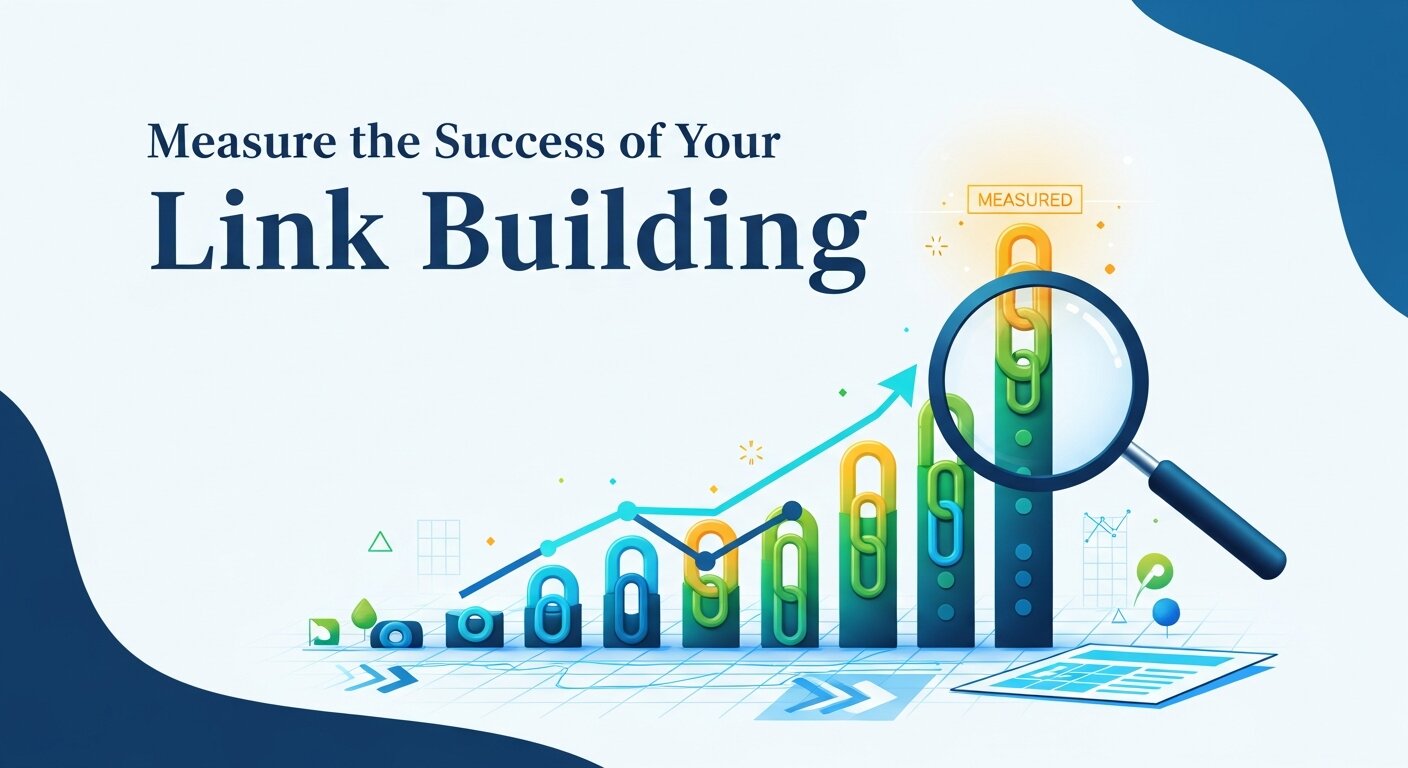 Tracking your ethical link building efforts is essential for understanding what’s working and where to focus your energy. Key metrics to monitor include:
- Domain Authority (DA) / Domain Rating (DR): Track these scores monthly using Moz or Ahrefs to measure overall progress.
- Referring domains: Growth in the number of unique domains linking to your site is a strong indicator of link building success.
- Organic traffic: Ultimately, better backlinks should lead to better rankings and more visitors.
- New vs. lost backlinks: Monitor both gains and losses to maintain a healthy link profile.
Tools like Ahrefs, SEMrush, and Google Search Console make it straightforward to track these metrics over time.
Frequently Asked Questions
How long does ethical link building take to show results?
Ethical link building is a long-term strategy. Most businesses begin to see meaningful improvements in domain authority and rankings within three to six months of consistent effort. The timeline varies depending on your starting authority, the competitiveness of your industry, and the quality of links you’re earning.
How many backlinks do I need to improve my domain authority?
There’s no fixed number. Domain authority is influenced more by the quality and relevance of your backlinks than the quantity. A single link from a highly authoritative, relevant site can have more impact than dozens of links from low-quality sources.
Is guest posting still an effective, ethical link-building strategy?
Yes—when done correctly. Guest posting on reputable, relevant sites with genuine editorial standards is still a valuable strategy. The key is to focus on contributing real value to the host publication’s audience, not on the link itself.
Can I do ethical link building on a small budget?
Absolutely. Many of the most effective ethical link building strategies—like broken link building, unlinked mention reclamation, and creating original research—require time and effort rather than significant financial investment. Consistency matters more than budget.
What’s the difference between white-hat and black-hat link building?
White-hat link building refers to ethical strategies that comply with search engine guidelines, such as those covered in this post. Black-hat link building involves manipulative tactics—like buying links or using PBNs—that violate those guidelines and carry the risk of penalties.
Build Authority That Lasts
 Domain authority isn’t built overnight, and it isn’t built by gaming the system. The sites that consistently rank at the top of Google are those that have earned genuine trust—through quality content, authentic relationships, and ethical link building practices carried out over time.
The nine strategies outlined here give you a practical, sustainable roadmap to follow. Start with one or two that align with your current resources, track your progress, and build from there. Whether you’re a startup trying to establish credibility or an established business looking to scale your SEO, ethical link building is one of the highest-return investments you can make.
SanMo BD specializes in helping businesses build search authority the right way. If you’re ready to develop a customized ethical link building strategy, get in touch with the team today.