Video isn’t just the future of content marketing; it is the present. If you have spent any time scrolling through social feeds or searching for “how-to” guides on Google recently, you know that video dominates the landscape. But creating great video content is only half the battle. If your audience can’t find it, it might as well not exist.
This is where Advanced Video SEO comes into play. It is the secret weapon that top-tier digital agencies use to push their clients to the top of search engine results pages (SERPs). While basic SEO practices like adding a title and description are a good start, they are no longer enough to compete in a saturated market.
In this guide, we will break down the sophisticated strategies agencies like SanMo BD use to leverage video for massive organic growth. You will learn how technical optimization, schema markup, and strategic distribution can transform your video content into a traffic-generating machine.
The Evolution of Search: Why Video Matters More Than Ever
Search engines like Google have evolved significantly over the last decade. They are no longer just looking for text matching; they are looking for user intent and engagement. Video is the ultimate engagement tool.
Statistics show that users spend 88% more time on websites that include video. Google’s algorithms notice this “dwell time” and interpret it as a signal of high-quality content, rewarding those pages with higher rankings. Furthermore, video snippets now appear in standard search results, image searches, and the dedicated “Videos” tab, giving you three different ways to rank for a single piece of content.
However, Google’s bots cannot “watch” a video in the same way a human can. They rely on metadata, text transcripts, and structured data to understand what the video is about. Advanced Video SEO is the process of translating your visual content into a language that search engines understand perfectly.
The Power of Video Schema Markup
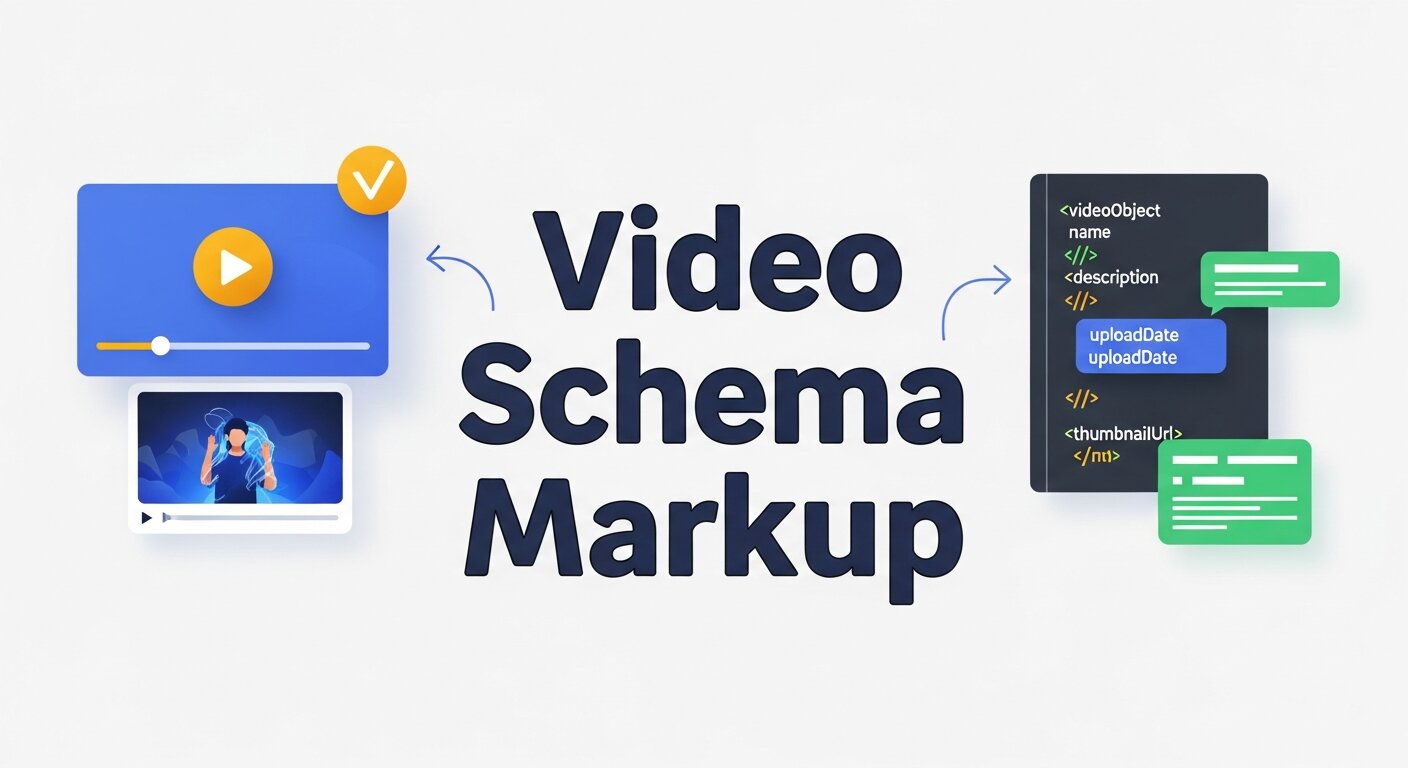
If there is one thing that separates amateur video SEO from agency-level execution, it is the use of Video Object Schema (VideoObject).
Schema markup is a code that you put on your website to help search engines return more informative results for users. For video, this is non-negotiable. Without it, Google might know there is a video on the page, but it won’t know the duration, the thumbnail, the upload date, or the specific moments within the video.
Implementing Key Clip and Seek Markup
Agencies don’t just use basic schema; they use advanced properties like “Key Moments” (clips). This allows Google to segment your video in the search results, letting users click directly to the part of the video that answers their specific question.
To do this effectively, agencies will:
- Define timestamps: Identify the most critical sections of the video.
- Label segments: Give each segment a descriptive, keyword-rich label.
- Embed the code: Use JSON-LD format to inject this data directly into the page’s HTML.
This doesn’t just improve ranking; it dominates the screen real estate on the search results page, pushing competitors further down.
Transcripts and Closed Captions as SEO Gold
Search engines are text-based crawlers. While their ability to process audio is improving, they still rely heavily on text to index content. Providing a full transcript is one of the most effective ways to make your video “readable” to Google.
The “Accordion” Method
A common mistake is hiding the transcript in a way that Google ignores or dumping a massive wall of text that ruins the user experience. SanMo BD often recommends the “accordion” method or a scrollable text box alongside the video. This keeps the page design clean while ensuring the text is crawlable.
Closed Captions (CC) vs. Open Captions
Agencies always prioritize Closed Captions files (.SRT or .VTT) over “burned-in” open captions. Why? Because search engines can crawl the.SRT file. This file acts as a secondary layer of keyword-rich data that reinforces the topic of your video. It also makes your content accessible to the hearing impaired and the 85% of social media users who watch videos with the sound off.
Hosting Architecture and Page Speed

Where you host your video matters just as much as what is in it, there is a constant debate between self-hosting and using third-party platforms like YouTube or Vimeo.
The Agency Hybrid Approach
Agencies know that page speed is a Core Web Vital. Self-hosting large video files can kill your page load speed, which hurts your rankings. However, embedding a standard YouTube video can sometimes leak traffic away from your site and onto YouTube.
The advanced solution involves a hybrid approach:
- Third-party hosting with custom players: Using professional hosting (like Wistia or Vimeo Pro) that allows for fast streaming without the “recommended video” distractions of YouTube.
- Lazy Loading: Ensuring the video player doesn’t load until the user scrolls to it or clicks “play.” This keeps the initial page load lightning fast.
- YouTube for Brand Awareness: Posting a version on YouTube for discovery, but ensuring the canonical “home” of the video is a landing page on your website.
Keyword Research Specific to Video Intent
People search differently on YouTube than they do on Google. On Google, a user might search “best DSLR camera.” On YouTube, they might search “Canon vs. Nikon camera test footage.”
Advanced Video SEO requires understanding these nuances. Agencies use tools like Ahrefs, SEMrush, and TubeBuddy to identify high-volume keywords specifically for video platforms.
Targeting “How-to” and “Review” Queries
Video content excels at answering specific types of queries. Agencies specifically target keywords that trigger video carousels on Google. These are usually instructional (“how to install a faucet”) or reviews (“iPhone 13 review”). By aligning video content with these specific search intents, you increase the likelihood of appearing on the main Google search page, not just the video tab.
Thumbnail Optimization for CTR
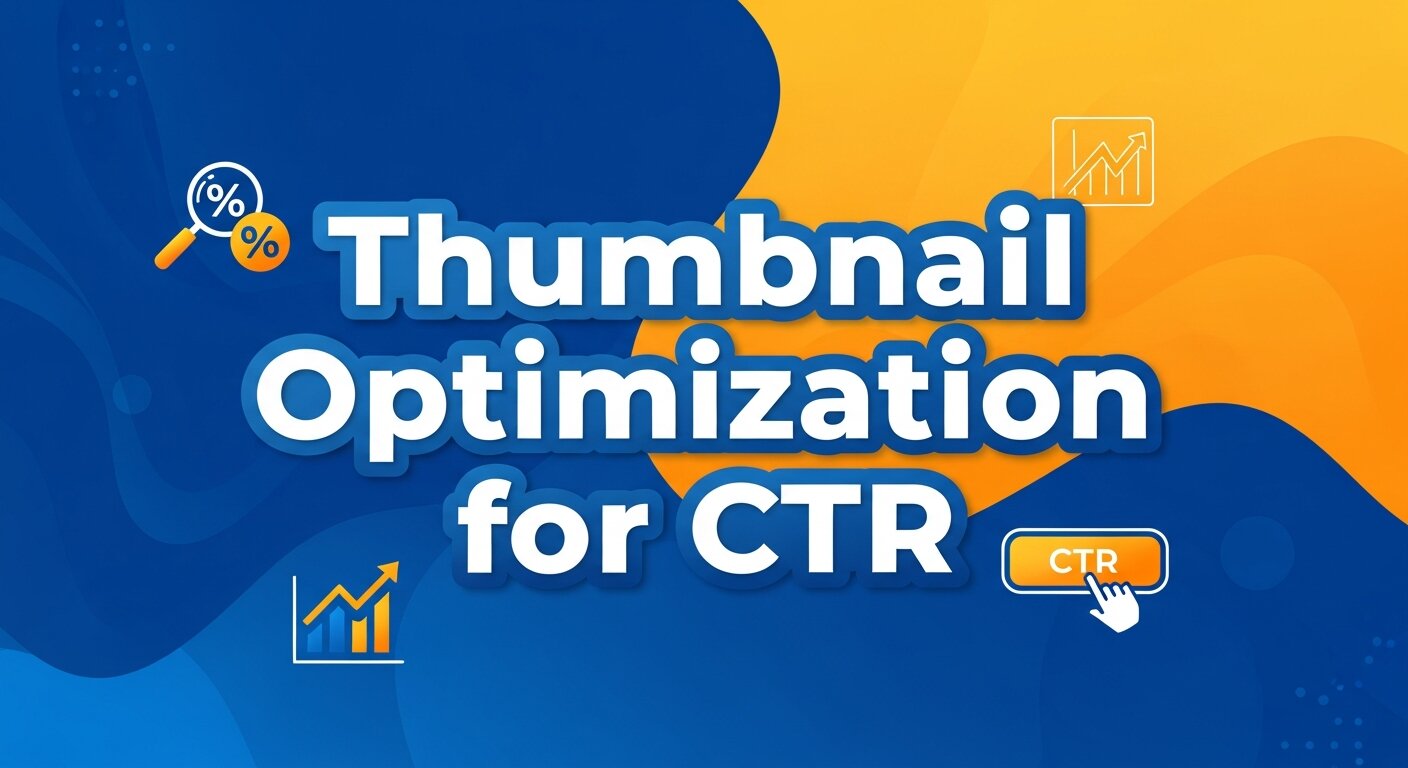
You can have the best SEO in the world, but if no one clicks, your rankings will drop. Click-Through Rate (CTR) is a major ranking factor for video.
Agencies treat thumbnails like movie posters. They don’t just grab a random frame from the video. They design custom graphics that include:
- High-contrast colors: To stand out against the white background of Google or YouTube.
- Human faces: Expressive faces drive higher click rates.
- Text overlays: Short, punchy text that complements (but doesn’t repeat) the title.
SanMo BD emphasizes that the thumbnail needs to verify the promise made in the title. If the title is “How to fix a leak in 5 minutes,” the thumbnail shouldn’t just be a picture of a wrench; it should look active and urgent.
The “Video First” Page Layout
Google creates a distinction between a page with a video and a “video page.” For the best chance of ranking in video search features, the video must be the main focus of the content.
Advanced SEOs ensure that the video is placed “above the fold” (visible without scrolling). They surround the video with relevant context but ensure it is the distinct centerpiece. If a user has to scroll past five paragraphs of text to find the play button, Google is less likely to feature that URL as a video result.
Backlinking to Video Landing Pages
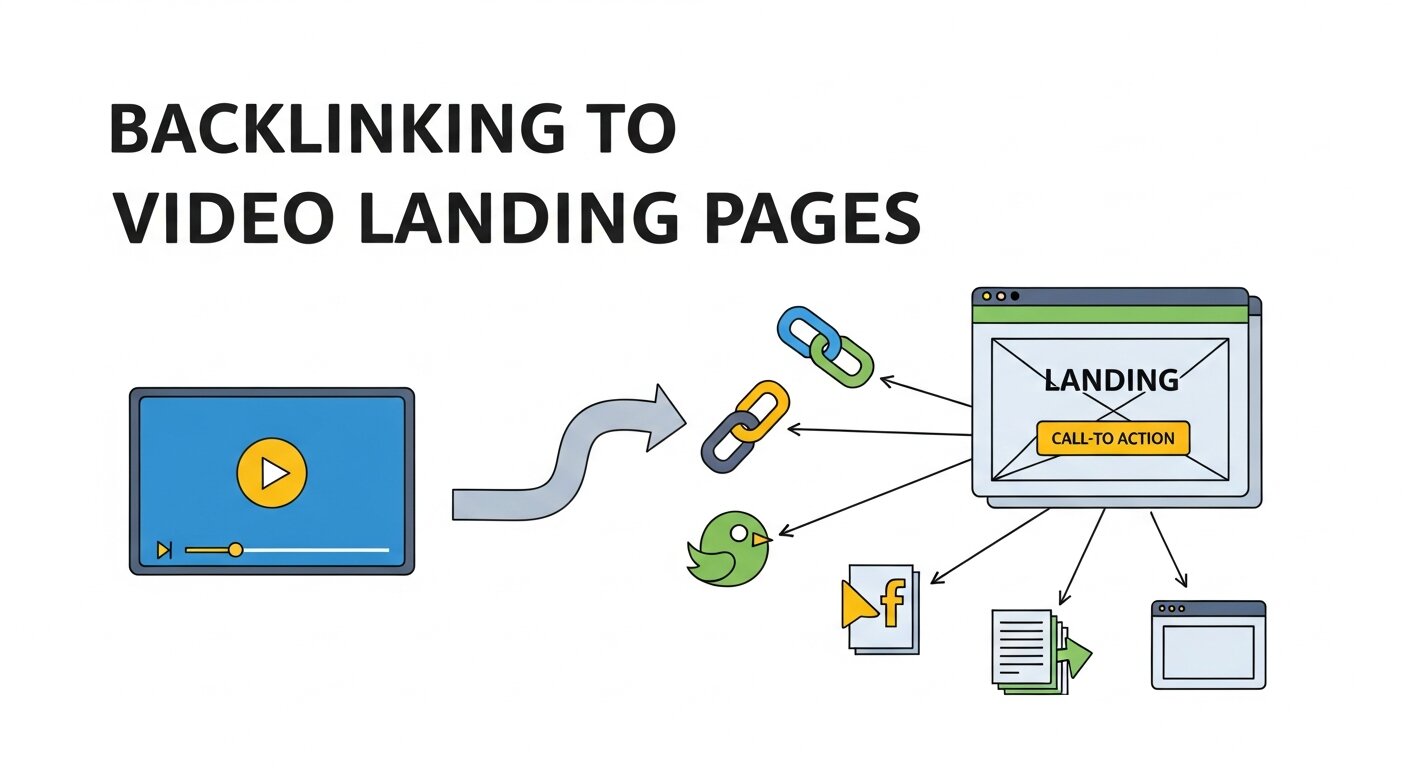
Just like standard web pages, video pages need authority to rank. Agencies build backlink campaigns specifically for their video content.
They do this by:
- Guest Posting: Writing articles for industry publications and embedding the client’s video as a resource.
- Social Amplification: Using social channels to drive initial traffic signals.
- PR Outreach: Pitching the video content to journalists and bloggers as a reference for their stories.
The goal is to signal to Google that this specific video is an authoritative source on the topic.
Why Partnering with an Agency Like SanMo BD Makes a Difference
Implementing one or two of these strategies might yield some results, but Advanced Video SEO is about the aggregation of marginal gains. It requires technical coding skills for schema, creative skills for thumbnails, editorial skills for transcripts, and analytical skills for keyword research.
SanMo BD specializes in integrating these disparate elements into a cohesive strategy. They understand that video isn’t just a content format; it’s a data asset. By handling the technical heavy lifting, they allow businesses to focus on creating great content while the agency ensures that content dominates the search results.
Frequently Asked Questions (FAQ)
What is the difference between standard SEO and Advanced Video SEO?
Standard SEO focuses on optimizing text-based web pages through keywords, meta tags, and backlinks. Advanced Video SEO focuses specifically on optimizing video files and players. This includes technical tasks like implementing JSON-LD schema markup, creating closed caption files, optimizing video sitemaps, and targeting video-specific user intent to appear in video carousels and rich snippets.
Do I need to host my videos on YouTube to rank on Google?
No. In fact, for driving traffic to your website, hosting on YouTube can sometimes be counterproductive, as the traffic goes to YouTube, not you. While YouTube is excellent for brand awareness, agencies often recommend hosting videos on your own site (using tools like Wistia or Vimeo) and using Video Object Schema to help that specific page rank on Google.
How long does it take to see results from Video SEO?
Like all SEO, it is a long-term game. However, video content often has a “first-mover advantage.” Because fewer businesses are utilizing advanced schema and transcripts compared to standard text blogs, you can sometimes see rankings improve faster—often within 3 to 6 months—provided the technical implementation is perfect.
Can I do Video SEO myself, or do I need an agency?
You can handle the basics—like titles, descriptions, and tags—yourself. However, the “advanced” side—specifically generating and validating code for schema markup, managing video sitemaps, and conducting deep competitor analysis—is often best handled by an agency like SanMo BD. They have the tools and technical expertise to ensure you aren’t missing opportunities due to coding errors.
Does video length affect SEO rankings?
Indirectly, yes. Search engines prioritize engagement. If your video is 20 minutes long but people stop watching after 30 seconds, that’s a negative signal. If it’s 2 minutes long and people watch the whole thing, that’s positive. Agencies focus on “retention rate” rather than arbitrary length requirements. The video should be exactly as long as it needs to be to satisfy the user’s search query.
Mastering the Visual Search Landscape
The digital landscape is becoming increasingly visual. As bandwidth increases and attention spans shift, consumers prefer to watch rather than read. But the best video in the world provides zero ROI if it remains unseen.
Advanced Video SEO is the bridge between your creative efforts and your audience. It transforms your video from a passive piece of content into an active discovery tool. By implementing technical schema, optimizing for accessibility, and strategically aligning with user intent, you can secure prime real estate on search engine results pages.
Whether you choose to tackle these technical challenges in-house or partner with experts like SanMo BD, the time to prioritize video optimization is now. The agencies winning the top spots aren’t just lucky; they are technically prepared. Are you ready to join them?