Every interaction a customer has with your brand—whether it’s a Tweet, a review on Yelp, or a comment on a blog post—leaves a digital footprint. For businesses, these footprints are more than just noise; they are valuable data points that reveal how the public perceives your brand. Ignored, they can spiral into a PR nightmare. Harnessed correctly, they become a goldmine for improving customer engagement and driving Return on Investment (ROI).
This is where brand monitoring services come into play. It’s no longer enough to simply push marketing messages out into the void. To succeed, businesses must listen. By actively tracking mentions of your brand, products, and competitors across the web, you gain the agility to respond to customers in real-time, avert crises before they start, and tailor your strategies to what your audience actually wants.
In this guide, we will explore the mechanics of brand monitoring, how it directly correlates to improved customer relationships, and why investing in a service like SanMo BD can lead to a measurable increase in your bottom line.
The Evolution of Reputation Management
Years ago, reputation management was a reactive process. A company might wait for a quarterly focus group or a monthly sales report to understand customer sentiment. By the time the data arrived, it was often too late to pivot.
The digital landscape has fundamentally shifted this dynamic. Conversations happen instantaneously and publicly. A dissatisfied customer doesn’t just tell their neighbor; they tell their 500 followers, who might retweet it to thousands more. Conversely, a happy customer can become a powerful brand advocate if their praise is acknowledged and amplified.
Brand monitoring services have evolved from simple “Google Alerts” setups to sophisticated platforms that analyze sentiment, track share of voice, and identify influencers. This proactive approach allows businesses to shape the narrative rather than just reacting to it. It transforms reputation management from a damage-control tactic into a strategic growth driver.
Why Engagement Matters for ROI
Engagement is often viewed as a “vanity metric”—something that looks good on a social media report but doesn’t necessarily pay the bills. However, the link between high engagement and ROI is stronger than many realize.
When a brand actively engages with its audience, it builds trust. Trust reduces the friction in the buying process. A customer who feels heard and valued is more likely to make a repeat purchase and, crucially, less likely to churn.
Consider the cost of acquiring a new customer versus retaining an existing one. It is significantly cheaper to keep a current customer happy than to find a new one. Brand monitoring facilitates this retention by alerting you to customer service issues immediately. If a user complains on Twitter about a shipping delay, and your team responds within minutes with a solution, you haven’t just solved a problem; you’ve demonstrated reliability. That customer is now more likely to stick around, increasing their Lifetime Value (LTV).
Core Benefits of Brand Monitoring Services
Implementing a robust brand monitoring strategy offers several tangible benefits that go beyond simple vanity metrics.
1. Real-Time Crisis Mitigation
Bad news travels fast. A negative review or a misunderstood marketing campaign can go viral in hours. Without monitoring tools, you might wake up to a PR disaster that has been brewing all night.
Brand monitoring services act as an early warning system. By setting up alerts for spikes in negative sentiment or specific keywords, you can catch issues when they are still small sparks, rather than raging fires. This capability is essential for reputation management, allowing you to address misconceptions or apologize for errors before they cause lasting damage to your brand equity.
2. Uncovering Product Insights
Your customers are constantly giving you feedback, even if they aren’t submitting formal support tickets. They discuss features they wish you had, bugs they’ve encountered, or pricing concerns on forums like Reddit and niche industry sites.
SanMo BD and similar services aggregate this unstructured data. Instead of guessing what your product roadmap should look like, you can let customer conversations guide you. If you notice a trend of users asking for a specific integration, prioritizing that feature isn’t a gamble—it’s a calculated decision based on demand. This leads to better product-market fit and, ultimately, higher sales.
3. Competitor Intelligence
Brand monitoring isn’t just about watching yourself; it’s about watching the competition. What are customers complaining about regarding your biggest rival? Is there a gap in their service that you can fill?
By tracking competitor mentions, you can identify their weaknesses and capitalize on them. If a competitor experiences a service outage, it might be the perfect time to run a targeted ad campaign emphasizing your uptime reliability. This strategic use of data allows you to win over dissatisfied customers from other brands, directly boosting your market share and ROI.
4. Identifying Brand Advocates and Influencers
Not all mentions are negative. Many people out there are likely already singing your praises. These are your micro-influencers and brand advocates.
Monitoring tools help you identify who these people are. Once identified, you can engage with them—send them swag, feature them on your official channels, or invite them to an affiliate program. Leveraging existing organic enthusiasm is far more cost-effective than cold outreach to influencers who may not even know your product. This authentic advocacy resonates deeply with potential buyers.
How SanMo BD Elevates the Process
While there are many tools available, SanMo BD distinguishes itself by focusing on actionable intelligence rather than just data dumps. The challenge with many monitoring services is information overload. You don’t need to know every single time your brand name appears; you need to know when it matters.
SanMo BD uses advanced filtering and sentiment analysis to cut through the noise. It helps categorize mentions by urgency and sentiment, ensuring your team focuses its energy on the interactions that will move the needle. Whether it’s a high-priority support issue or a golden marketing opportunity, SanMo BD ensures you see it clearly and quickly.
Furthermore, the reporting capabilities allow you to tie specific engagement efforts back to financial metrics. You can track how sentiment shifts correlate with sales cycles, giving you a clearer picture of your marketing ROI.
Sentiment Analysis: Understanding the Emotion Behind Mentions
Not all brand mentions carry the same weight. A simple tag or share is different from an emotionally charged complaint or enthusiastic recommendation. Advanced brand monitoring services use sentiment analysis to categorize mentions as positive, negative, or neutral. This allows businesses to quickly gauge public perception at scale. Instead of manually reading hundreds of comments, your team can identify patterns in customer mood and respond strategically. For example, a sudden spike in negative sentiment may indicate a product issue or service disruption. On the other hand, positive spikes can highlight successful campaigns worth amplifying. Understanding emotional context helps brands respond appropriately, strengthening relationships and improving long-term trust.
Multi-Channel Monitoring for Complete Visibility
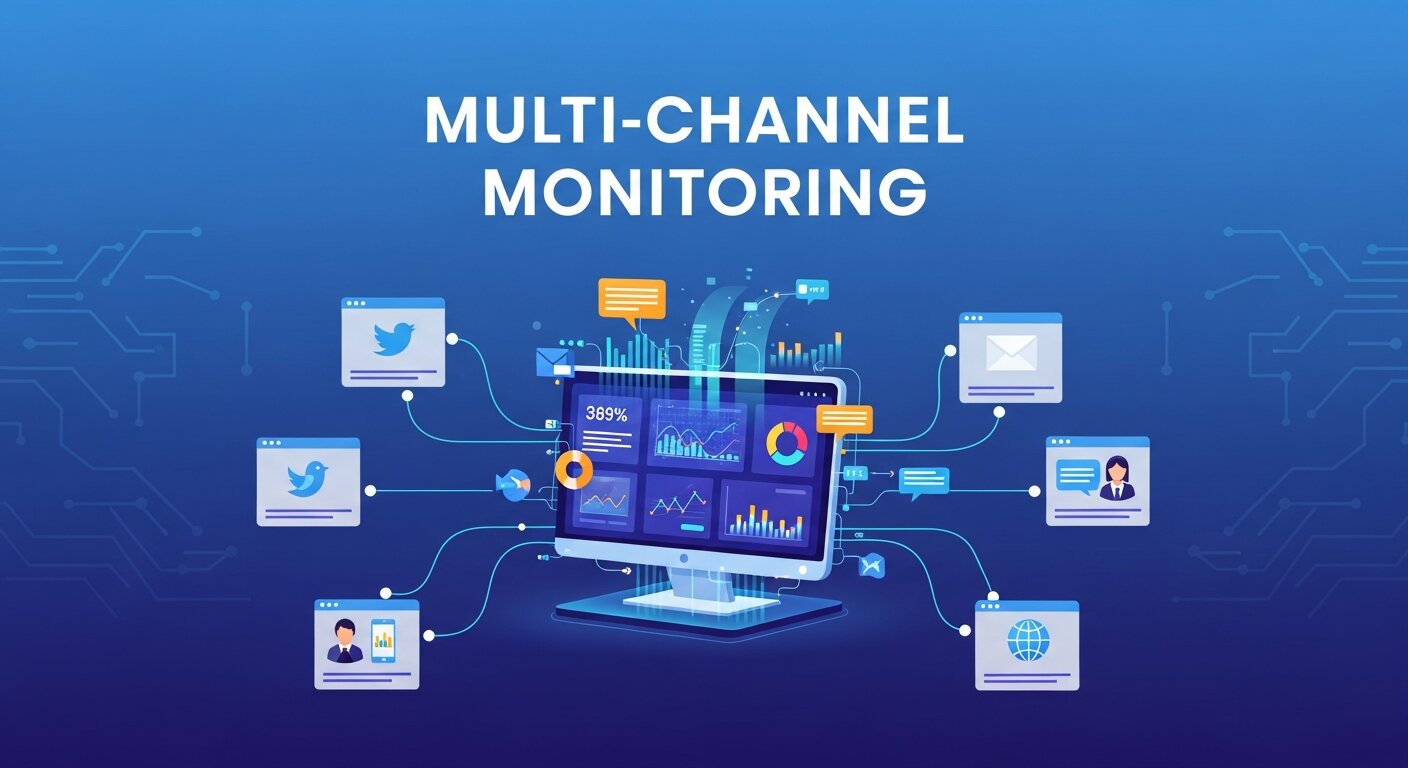
Today’s customers don’t stay on one platform. They might discover your brand on Instagram, read reviews on Yelp, compare feedback on Reddit, and then post their own opinion on Twitter. A fragmented monitoring approach leaves blind spots. Comprehensive brand monitoring services consolidate data from multiple digital channels into a single dashboard. This unified visibility ensures no important conversation goes unnoticed. It also allows businesses to compare sentiment across platforms and tailor communication strategies accordingly. For instance, a more formal tone may work on LinkedIn, while a casual approach performs better on social platforms. Multi-channel oversight guarantees consistent messaging and faster response times across your entire digital ecosystem.
Building a Proactive Brand Voice
Monitoring is not just about reacting—it’s about shaping perception proactively. By consistently engaging with customers, thanking them for positive reviews, and addressing concerns transparently, you develop a recognizable and trustworthy brand voice. Over time, audiences begin to associate your company with responsiveness and authenticity. This consistency builds emotional loyalty, which is harder for competitors to disrupt. Brand monitoring services provide the insights needed to maintain that voice across all interactions. When your messaging aligns with customer expectations and values, engagement becomes more meaningful. A proactive communication strategy transforms your brand from a faceless company into a relatable presence that customers genuinely trust and recommend.
Strategies for Turning Data into Action

Having the data is step one. Knowing what to do with it is step two. Here are practical ways to integrate brand monitoring into your daily operations.
The “Listen and Respond” Loop
Establish a protocol for response times. If a customer asks a question on social media, how fast should they expect an answer? Brand monitoring services can help you track your response rates and times. Aim to be faster than your industry average. Speed implies competence and care.
Content Creation Based on Queries
If you see the same question popping up repeatedly across different channels, that’s a signal. It means your existing documentation or website copy isn’t clear enough. Use these insights to create FAQ pages, blog posts, or tutorial videos. This not only helps the customers asking the question but also improves your SEO by targeting the exact phrases people are using to search for help.
Personalized Customer Experiences
When you know a customer’s history—their past complaints, their favorite features, their interactions on social media—you can tailor your communication. Brand monitoring data can often be integrated into CRM systems. When a sales rep reaches out to a lead, knowing that the lead recently tweeted about loving a specific feature gives the rep a powerful opening hook.
Measuring the ROI of Reputation Management
To justify the investment in services like SanMo BD, you need to measure the results. ROI in this context comes from three main buckets:
- Cost Savings: Reduction in customer support costs due to proactive issue resolution and self-service content created from monitoring insights.
- Revenue Protection: Preventing churn by saving at-risk customers who express dissatisfaction online.
- Revenue Growth: New customer acquisition through word-of-mouth, influencer marketing, and product improvements driven by feedback.
By tracking these metrics over time, the value of a comprehensive monitoring strategy becomes undeniable. It shifts the perspective of marketing from a cost center to a revenue generator.
Frequently Asked Questions
What exactly do brand monitoring services track?
Brand monitoring services track mentions of specific keywords across the internet. This includes social media platforms (Twitter, Facebook, LinkedIn, Instagram), blogs, news sites, forums (like Reddit), and review sites (like Yelp or TripAdvisor). They can track your brand name, specific product names, executive names, slogans, and even competitor names.
How does brand monitoring differ from social listening?
While the terms are often used interchangeably, there is a nuance. Brand monitoring is often about tracking mentions and reacting to them (reputation management). Social listening is a broader concept that involves analyzing these conversations to understand trends, industry shifts, and customer sentiment at a macro level to inform long-term strategy. SanMo BD covers aspects of both to provide a complete picture.
Is brand monitoring only for large enterprises?
No. Small and medium-sized businesses arguably have more to lose from a damaged reputation because they have less established equity to fall back on. A single bad review can hurt a local business significantly. Scalable solutions like SanMo BD offer packages that are suitable for businesses of all sizes, ensuring that even startups can protect their brand.
Can brand monitoring help with SEO?
Indirectly, yes. By monitoring for unlinked brand mentions (where a site mentions you but doesn’t link to you), you can reach out to the author and ask for a link. This link-building strategy is highly effective for improving domain authority and search rankings. Additionally, understanding the questions your audience asks helps you create content that ranks for relevant search queries.
How much time does it take to manage brand monitoring?
It depends on the volume of conversation around your brand. However, good tools are designed to save time, not consume it. By setting up smart alerts and filters, a marketing manager might spend only 15-30 minutes a day reviewing the most critical mentions, while the tool handles the heavy lifting of data aggregation.
The Future of Customer Engagement
The gap between brands and consumers is closing. The walls are down. In this transparent environment, the businesses that thrive are the ones that are most responsive and most aligned with their customers’ needs.
Brand monitoring services provide the eyes and ears required to navigate this landscape. They provide the necessary intelligence to turn casual browsers into buyers and buyers into loyal advocates. By leveraging tools like SanMo BD, you aren’t just protecting your reputation; you are actively building a stronger, more profitable business.
Don’t let the conversation happen without you. Start listening today, and watch your customer engagement—and your ROI—soar.