The SaaS market is booming. Global SaaS revenue is projected to exceed $700 billion by 2030, and businesses of all sizes are racing to carve out their slice of the market. But launching a successful SaaS product takes more than a great idea—it requires a disciplined development strategy, the right technical foundation, and a team that understands how to build software that scales.
Whether you’re a startup founder with a bold vision or an enterprise looking to productize an internal tool, the path from concept to a commercially viable SaaS platform is filled with critical decisions. Choose the right SaaS development services partner and framework early, and you’ll save months of costly rework later.
This guide covers the key strategies behind building successful SaaS products—from architecture decisions and development methodologies to go-to-market timing and long-term scalability. By the end, you’ll have a clear picture of what it takes to turn a SaaS idea into a market-ready product.
What Are SaaS Development Services?
SaaS development services refer to the full spectrum of technical and strategic support involved in designing, building, deploying, and maintaining software-as-a-service products. These services typically cover:
- Product discovery and roadmap planning
- UI/UX design and prototyping
- Frontend and backend engineering
- Cloud infrastructure setup and DevOps
- API development and third-party integrations
- QA testing and security auditing
- Ongoing maintenance and feature development
Companies like SanMo BD specialize in end-to-end SaaS development services, helping clients translate complex business requirements into scalable, high-performance software products. Rather than stitching together freelancers or managing siloed teams, working with a dedicated SaaS development partner provides continuity, accountability, and technical cohesion across the entire product lifecycle.
Start With a Validated Problem—Not a Feature List
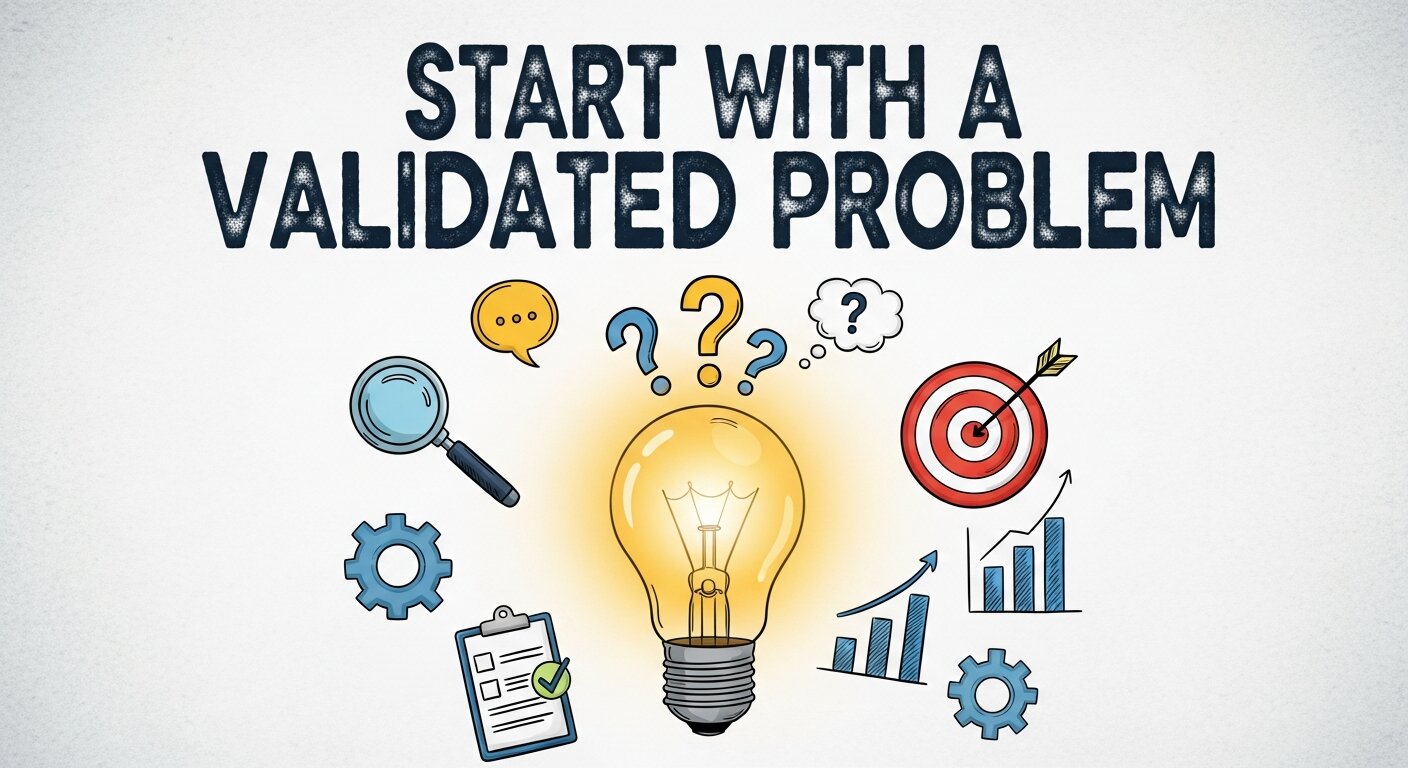 The most common reason SaaS products fail isn’t poor engineering. It’s building something nobody wants.
Before a single line of code is written, founders and product teams need to validate that a real, recurring problem exists—and that target users are willing to pay for a solution. This means conducting user interviews, analyzing competitor gaps, and testing assumptions early through prototypes or landing page experiments.
A strong SaaS development partner will push clients through a discovery phase that surfaces these insights upfront. This isn’t just box-ticking. It’s the difference between building a product that finds product-market fit quickly and one that burns through runway chasing the wrong audience.
Key validation activities to prioritize before development:
- Customer interviews: Talk to at least 20–30 potential users about their current workflows and pain points.
- Competitive analysis: Map out existing solutions and identify where they fall short.
- Willingness-to-pay research: Use pricing surveys or pre-sales to test whether your target segment values the solution enough to pay for it.
- MVP scoping: Define the smallest version of your product that delivers core value and can be tested with real users.
Choosing the Right Architecture for Scale
One of the most consequential early decisions in SaaS development is how to architect the application. Get this wrong, and you’ll face painful—and expensive—refactoring down the line.
Multi-Tenancy vs. Single-Tenancy
Most modern SaaS products are built on a multi-tenant architecture, where a single instance of the software serves multiple customers. This approach reduces infrastructure costs, simplifies maintenance, and makes scaling more predictable. Single-tenancy—where each customer gets their own isolated environment—is typically reserved for enterprise clients with strict data residency or compliance requirements.
Microservices vs. Monolithic Architecture
Early-stage SaaS products often benefit from a monolithic architecture, which is simpler to build and deploy quickly. As the product matures and team size grows, migrating to microservices allows independent scaling of individual components and faster feature development across parallel teams.
A pragmatic SaaS development services team will help you choose the architecture that fits your current stage—not just the one that sounds most impressive on a tech blog.
Cloud Infrastructure
AWS, Google Cloud, and Microsoft Azure all offer robust environments for SaaS deployment. The right choice depends on your team’s existing expertise, your customers’ geographic locations, and any specific services (like AI/ML tooling or compliance certifications) that a particular cloud provider does better.
Building for Security and Compliance From Day One
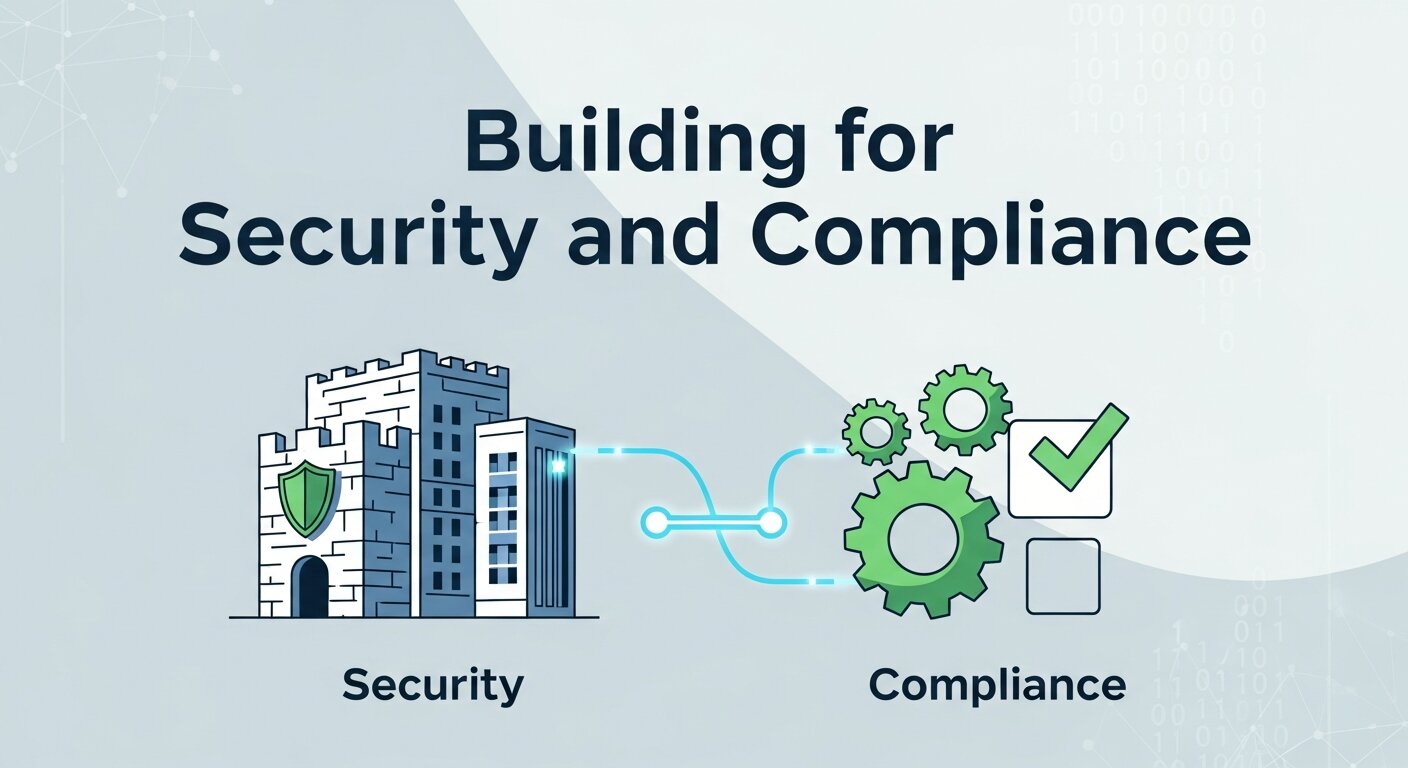 Security is non-negotiable in SaaS. A single data breach can destroy customer trust and invite regulatory consequences that take years to resolve.
The smartest SaaS teams treat security as a design principle—not an afterthought. This means implementing role-based access controls (RBAC), encrypting data at rest and in transit, conducting regular penetration testing, and building audit logging into core workflows from the start.
Compliance requirements vary by industry and geography. SaaS products serving healthcare clients in the US need to meet HIPAA standards. Those handling European customer data must align with GDPR. Financial platforms may face SOC 2 requirements. Mapping compliance obligations early—and building them into your architecture—is far less painful than retrofitting them after launch.
Development Methodology: Why Agile Matters in SaaS
SaaS development is rarely a straight line. Requirements evolve, user feedback reshapes priorities, and market conditions shift. Agile development methodologies—particularly Scrum and Kanban—give product teams the flexibility to adapt without losing momentum.
Agile works particularly well for SaaS because it aligns with the subscription model’s core dynamic: continuous delivery of value. Rather than shipping one large product update every quarter, agile teams release smaller, more frequent updates. This keeps users engaged, surfaces bugs faster, and makes it easier to respond to competitive pressure.
SanMo BD and other experienced SaaS development services providers structure their engagement around agile principles—typically running two-week sprints, maintaining a prioritized product backlog, and embedding QA testing throughout the development cycle rather than at the end.
Designing for User Experience (And Retention)
Acquisition gets users through the door. Experience keeps them there.
SaaS churn is one of the biggest threats to sustainable growth. If users can’t figure out how to use your product in the first session, or if core workflows feel clunky and unintuitive, they’ll cancel before they’ve seen its real value.
Investing in UX research and design early pays compounding dividends. This means:
- Onboarding flows that guide new users to their first “aha moment” as quickly as possible
- Clear information architecture so users can find what they need without hunting
- Responsive design that works across desktop and mobile
- In-app tooltips and help documentation that reduce support load and build user confidence
User experience design should be treated as a core product function—not a cosmetic layer applied at the end of the build.
Integration Strategy: Building a Connected Product
No SaaS product exists in isolation. Users expect their tools to work together, and a well-planned integration strategy can significantly expand your product’s value proposition.
Identify the tools your target users already rely on—CRMs, marketing platforms, payment gateways, communication tools—and prioritize native integrations or API compatibility with the most critical ones. Platforms that connect effortlessly with the rest of a user’s tech stack see higher adoption rates and lower churn.
Building a public API also opens the door to a developer ecosystem, allowing third parties to extend your product’s functionality and create distribution channels you don’t have to build yourself.
Go-to-Market Timing: When Is “Good Enough” Ready?
Shipping too early damages credibility. Waiting too long means losing ground to competitors.
The right launch window is when your MVP delivers clear, reliable value for a defined use case—even if it lacks the full feature set you’ve envisioned. Early adopters don’t expect perfection. They expect a product that solves a specific problem better than the alternatives, and a team that listens and iterates.
A disciplined SaaS development services partner will help you define launch readiness criteria upfront—specifying the features, performance benchmarks, and security requirements that must be met before you go live.
Post-Launch: Scaling Your SaaS Product
Launch isn’t the finish line. For SaaS, it’s closer to the starting gun.
Post-launch, the focus shifts to retention, expansion revenue, and performance at scale. This means:
- Monitoring key SaaS metrics: MRR, churn rate, customer lifetime value (LTV), and net revenue retention (NRR)
- Building a feedback loop: Using in-app surveys, support tickets, and usage analytics to continuously prioritize the roadmap
- Scaling infrastructure: Ensuring the platform performs reliably as the user base grows
- Expanding the feature set: Adding capabilities that deepen the product’s value and justify expansion pricing
The best SaaS businesses treat their product as a living system—one that evolves in lockstep with customer needs and market conditions.
Implement Data Analytics to Drive Product Decisions
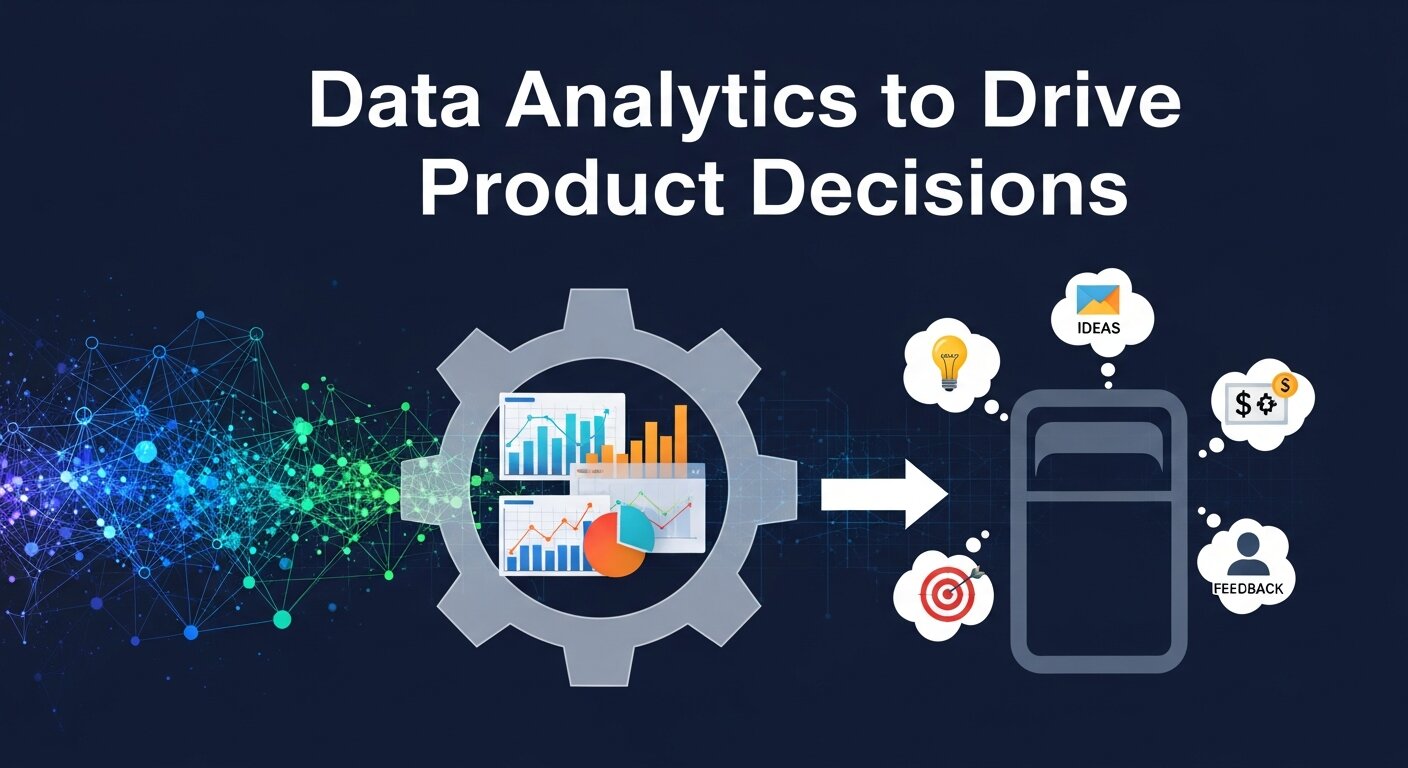 Data analytics is a critical component of modern SaaS development. Successful SaaS products rely on data to understand how users interact with the platform and where improvements are needed. By integrating analytics tools from the early stages of development, product teams can track user behavior, identify bottlenecks, and measure feature adoption.
Metrics such as daily active users (DAU), feature engagement, and session duration provide valuable insights into how customers experience your software. This data allows teams to make informed product decisions instead of relying on assumptions. Analytics also help prioritize development efforts by highlighting which features deliver the most value. Over time, a data-driven approach ensures that the SaaS product evolves in ways that align closely with real user needs and business goals.
Focus on Customer Support and User Success
Customer support plays a vital role in the long-term success of any SaaS product. Even the most well-designed platforms can create confusion for new users if guidance and assistance are not readily available. Providing responsive and effective support helps users overcome challenges quickly and increases overall satisfaction.
Successful SaaS companies often invest in multiple support channels, including live chat, help centers, email support, and in-app assistance. Creating a knowledge base with tutorials, FAQs, and step-by-step guides can also empower users to solve common issues independently. In addition, a dedicated customer success strategy ensures that users continue to gain value from the platform over time. Strong support systems not only reduce churn but also turn satisfied customers into loyal advocates for the product.
Frequently Asked Questions
How long does it take to build a SaaS product?
The timeline varies depending on complexity, but most MVPs take between three and six months to develop. A full-featured product with advanced integrations, custom workflows, and enterprise-grade security can take 9–18 months or more. Working with an experienced SaaS development services team—like SanMo BD—can significantly compress timelines by reducing the back-and-forth of misaligned requirements.
How much does SaaS development cost?
Costs range widely based on the scope of the product, the size of the development team, and the technology stack. Early-stage MVPs can be built for $30,000–$80,000. More complex platforms with custom integrations and compliance requirements often exceed $150,000. Partnering with a dedicated SaaS development agency generally offers a better cost-to-quality ratio than assembling an in-house team from scratch.
What’s the difference between custom SaaS development and off-the-shelf software?
Off-the-shelf software solves general problems. Custom SaaS development builds solutions tailored to your specific workflows, business model, and customer needs. For companies with a differentiated product vision, custom development is the only way to create a defensible competitive advantage.
Should I build in-house or hire a SaaS development services partner?
Both approaches have merit. Building in-house gives you full control and deep institutional knowledge, but requires significant time and investment to hire the right talent. Partnering with a SaaS development services company like SanMo BD offers faster time-to-market, access to specialized expertise, and a proven development process—particularly valuable for early-stage companies that need to move quickly without building out a large internal team.
How do I ensure my SaaS product is scalable?
Scalability starts with architecture decisions made at the beginning of the project—choosing the right cloud infrastructure, designing a multi-tenant data model, and building loosely coupled components that can scale independently. Regular load testing, performance monitoring, and proactive infrastructure optimization are equally important as your user base grows.
Build Smarter With the Right SaaS Development Partner
 Building a successful SaaS product is a long game. The companies that win aren’t necessarily the ones with the biggest budgets or the most features—they’re the ones that validate early, build with discipline, listen to their users, and iterate without losing focus.
Every strategic decision you make in the development process—from architecture to UX to go-to-market timing—shapes the trajectory of your product. Getting those decisions right from the start is where experienced SaaS development services make the biggest difference.
SanMo BD brings the technical expertise, strategic guidance, and development rigor to help you build a SaaS product that doesn’t just launch—it grows. Ready to build something great? Get in touch with the SanMo BD team to start your product journey.