Remember when “I’ll Google it” was the answer to every question? That era is officially behind us.
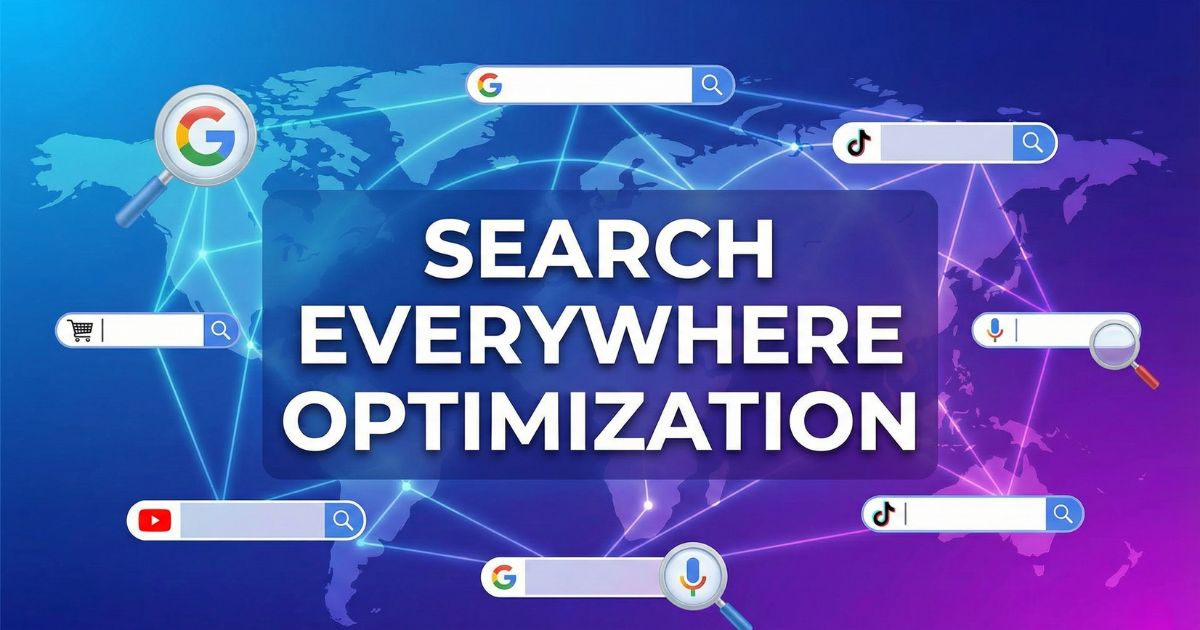
The year is 2026, and the digital landscape has fractured. Users no longer default to a single search bar for their information. A Gen Z shopper looks for product reviews on TikTok. A developer debugs code using a Large Language Model (LLM). A homeowner asks a smart speaker for local plumbers, and a fashion enthusiast searches via images on Pinterest or Google Lens.
If your marketing strategy still revolves entirely around ranking first on a Google Search Engine Results Page (SERP), you are invisible to a massive segment of your audience.
Welcome to the age of Search Everywhere Optimization. This isn’t just about keywords anymore; it is about omnipresence. It is about meeting the user exactly where they are, in the format they prefer, at the exact moment curiosity strikes.
At SanMo BD, we have watched this shift accelerate over the last half-decade. We have moved our clients away from “Google-only” dependency toward a holistic visibility strategy. In this comprehensive guide, we will break down what Search Everywhere Optimization entails, why the “ten blue links” are dead, and how your business can dominate the fragmented search ecosystem of 2026.
The Death of Monolithic Search
For twenty years, SEO was synonymous with Google. The playbook was simple: optimize your website, build backlinks, and wait for the crawler to index you.
But 2026 operates differently. The monopoly on curiosity has ended. Data shows that users now fracture their search intent across specialized platforms.
- Transactional Intent: Users go directly to Amazon or the Instagram Shop.
- Informational Intent: Users ask AI agents like ChatGPT, Gemini, or Perplexity for synthesized answers.
- Visual Intent: Users utilize Pinterest or Google Lens.
- Social Validation: Users search TikTok or Reddit for “real human” opinions.
This fragmentation means that “Search Volume” on Google is no longer the single source of truth for consumer demand. A topic might have low search volume on Google but be trending virally on TikTok. If you aren’t optimizing for the latter, you are missing the demand entirely.
The Shift from Indexing to Generating
The most profound change in 2026 is the shift from search engines that index content to answer engines that generate it.
Traditional SEO was about convincing an algorithm to point users to your website. Search Everywhere Optimization includes Generative Engine Optimization (GEO). This involves optimizing your content so that AI models cite your brand as the authority when they generate an answer for a user.
When a user asks an AI, “What is the best CRM for a small plumbing business?”, the AI doesn’t give them ten links. It gives them a paragraph recommendation. If your brand isn’t part of the training data or recognized as a highly cited entity, you don’t just rank low—you don’t exist.
The Pillars of a Search Everywhere Strategy

To succeed in this new environment, businesses must stop thinking in terms of “web pages” and start thinking in terms of “entities” and “platforms.” Here are the core pillars of the SanMo BD approach to Search Everywhere Optimization.
1. Social Search Optimization (SSO)
Social media platforms are no longer just for entertainment; they are functional search engines. For demographics under 40, TikTok and Instagram are the primary tools for discovery.
Optimizing for social search requires a different technical skillset than web SEO:
- Keywords in Captions and Overlays: Algorithms scan video, audio, text overlays, and captions. Your keywords need to be spoken and written within the creative itself.
- Hashtag Taxonomy: Unlike the “stuffing” days of 2018, hashtags in 2026 act as categorical filing systems. Using broad, high-volume tags alongside niche, specific tags helps the algorithm categorize your content correctly.
- Engagement as a Ranking Signal: On Google, backlinks signal authority. On social search, retention time and shares signal relevance. If people watch your video to the end, the platform assumes it answers the search query effectively.
2. Generative Engine Optimization (GEO)
As mentioned, ranking in AI responses is the new frontier. This requires a shift from “keyword matching” to “brand authority.”
AI models favor content that is factually accurate, widely cited, and structurally sound. To optimize for this:
- Be the Source of Truth: Publish original research, data studies, and expert commentary. AI models prioritize primary sources over derivative content.
- Structured Data: Use extensive Schema markup. You need to speak the language of the machine, explicitly telling the AI, “This is a product,” “This is a review,” or “This is a price.”
- Brand Mentions: You need your brand name to appear in authoritative contexts across the web. The more often your brand is associated with specific industry terms in reputable publications, the stronger the association in the Large Language Model.
3. Visual and Voice Presence
Visual search has matured from a gimmick to a daily utility. With smart glasses and improved phone cameras, users search by looking.
- High-Fidelity Assets: Your product images must be high-resolution and feature multiple angles.
- Alt Text and Metadata: Descriptive file names and alt text are crucial for image recognition software to understand what is in the picture.
Simultaneously, voice search has evolved. Queries are longer, more conversational, and often local. “Where can I buy a vintage lamp?” has become “Is there a vintage furniture store open right now within walking distance?” Optimizing for these natural language queries is essential.
The SanMo BD Framework for 2026
Understanding the landscape is one thing; executing a strategy is another. At SanMo BD, we utilize a proprietary framework to ensure our clients are visible everywhere their customers look. We call this the Omni-Presence Flywheel.
Step 1: Intent Mapping
We don’t just look for keywords. We look for intent.
Before we create a single piece of content, we map out where the target audience asks questions. If we are selling enterprise software, we know the search happens on LinkedIn, Gartner, and specialized forums. If we are selling a beauty product, the search happens on TikTok and YouTube.
We ask: When the customer has this problem, which app do they open first?
Step 2: Content Atomization
Creating unique content for ten platforms is impossible for most marketing budgets. The solution is atomization.
We help clients create a “Core Asset”—usually a deep-dive video or a comprehensive research report. From this single asset, we fracture the content into platform-native formats:
- The report becomes a blog post (for Google).
- The key statistics become a carousel (for LinkedIn/Instagram).
- The methodology becomes a short-form video script (for TikTok/Reels).
- The transcript is optimized for NLP (for AI answer engines).
This ensures consistency of message while maximizing reach without maximizing effort.
Step 3: Entity Establishment
In the world of 2026 SEO, Google and AI need to know who you are, not just what you wrote.
SanMo BD focuses heavily on establishing your digital “Entity.” This involves claiming and optimizing knowledge panels, ensuring consistent NAP (Name, Address, Phone) data across the entire web, and building a digital footprint that screams legitimacy. We connect the dots so that when an AI looks for an expert in your field, your name is the logical answer.
Measuring Success in a Fragmented World
One of the biggest challenges of Search Everywhere Optimization is attribution. In the old days, Google Analytics told you everything. You saw a click, a session, and a conversion.
In 2026, the “Zero-Click” future is here.
If a user watches your TikTok review and then buys your product in-store, or if ChatGPT summarizes your article and the user gets the answer without visiting your site, traditional analytics go dark.
So, how do we measure success? We have to look at Aggregate Lift.
Share of Search
We track how often your brand name is searched across all platforms. If your “Search Everywhere” strategy is working, your branded search volume should rise, even if direct organic traffic to your blog stays flat.
Brand Mentions and Sentiment
We use advanced listening tools to monitor how often your brand is mentioned on social media, in forums, and by AI agents. Are you part of the conversation?
Native Platform Metrics
We stop treating website traffic as the only KPI. High engagement on TikTok, high visibility on Amazon, and frequent citations in AI answers are valid successes that drive revenue, even if they don’t drive clicks.
Why Technical SEO Still Matters
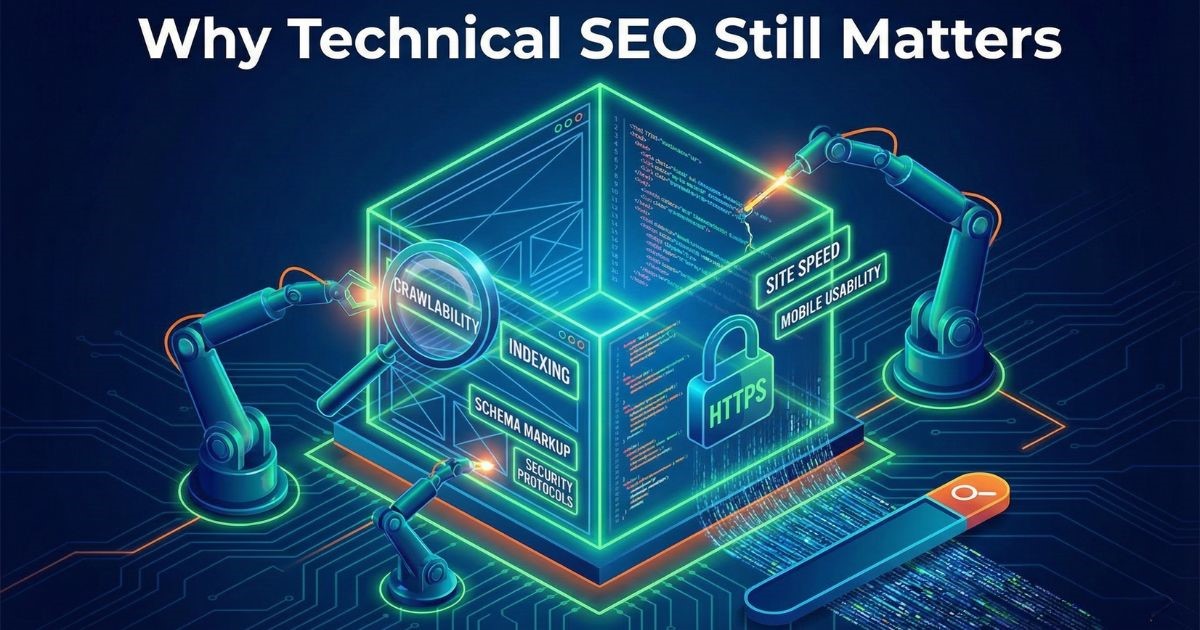
With all this talk of AI and social media, you might think your website doesn’t matter. That would be a fatal mistake.
Your website is still your home base. It is the one piece of digital real estate you own. While users might discover you on TikTok or Perplexity, they will eventually come to your site to convert, verify, or purchase.
Furthermore, your website feeds the other platforms. The structured data on your site tells Google Lens what your product is. The blog posts on your site train the AI models.
At SanMo BD, we ensure your technical SEO is bulletproof. Fast load times, mobile responsiveness, and clean code are the price of admission. Without a strong technical foundation, your Search Everywhere strategy collapses.
Preparing for the Future: Actionable Steps
If you are ready to pivot your strategy for 2026, here is where to start.
Audit Your Digital Footprint
Google your brand. Then search for it on TikTok. Then ask ChatGPT, “What does [Brand Name] do?” The results might surprise you. Identifying the gaps in how you appear across these different media is the first step toward fixing them.
Diversify Your Content Formats
If you only have a text blog, you are fighting with one hand tied behind your back. You need to invest in video and visual content immediately. It doesn’t need to be cinema-quality, but it needs to exist.
Embrace the “Human” Element
As AI content floods the web, human connection becomes a premium asset. Show the faces behind your brand. Share behind-the-scenes content. Authentic, human-created content is the one thing AI cannot replicate, and it is what social search algorithms crave.
The SanMo BD Difference
Navigating the transition from SEO to Search Everywhere Optimization is daunting. It requires a mix of technical expertise, creative flair, and strategic foresight.
This is where SanMo BD thrives. We aren’t just an SEO agency; we are a digital visibility partner. We understand the nuances of the 2026 ecosystem. We know how to make an algorithm love you, whether that algorithm belongs to Google, ByteDance, or OpenAI.
We help businesses stop chasing the ghost of 2015 SEO and start building a presence that is future-proof.
Conclusion
The era of relying on a single search engine to drive your business growth is over. The user journey has become a complex web of touchpoints, spanning social media, AI, voice assistants, and traditional search.
Search Everywhere Optimization is not a luxury; it is a necessity for survival in 2026. It demands that brands be more agile, more visual, and more authentic. It requires a shift in mindset from “getting clicks” to “being present.”
By adopting a holistic strategy that encompasses social search, generative engine optimization, and robust technical foundations, your brand can turn this fragmentation into an opportunity. You can be the answer, no matter where the question is asked.
Are you ready to be everywhere?
Frequently Asked Questions (FAQ)
What is the difference between SEO and Search Everywhere Optimization?
Traditional SEO focuses almost exclusively on ranking web pages in Google’s search results. Search Everywhere Optimization focuses on maximizing visibility across all platforms where users search, including social media (TikTok, Instagram), AI chat interfaces (ChatGPT), video platforms (YouTube), and marketplaces (Amazon).
Does Generative Engine Optimization (GEO) replace traditional SEO?
No, it complements it. Traditional SEO helps you rank in search engines that provide links. GEO helps you appear in the answers generated by AI models. Both rely on authority and clarity, but they require different optimization tactics.
Is blogging dead in 2026?
Absolutely not. Blogging remains vital for establishing authority and providing deep-dive information. However, the format of the blog needs to change. Blogs must now serve as source material that can be repurposed for social video and structured for AI understanding.
How can SanMo BD help my business with this transition?
SanMo BD specializes in multi-platform visibility. We conduct comprehensive audits to see where you are invisible, and then we build a custom content and technical strategy to ensure you appear on social search, AI results, and traditional SERPs.
Why is “Zero-Click” search a problem?
It isn’t a problem; it’s a reality. “Zero-Click” means the user gets their answer on the platform (like Google or TikTok) without clicking through to your website. While this hurts traffic metrics, it can still drive brand awareness and offline sales. The goal is to optimize for the impression and the brand association, not just the click.