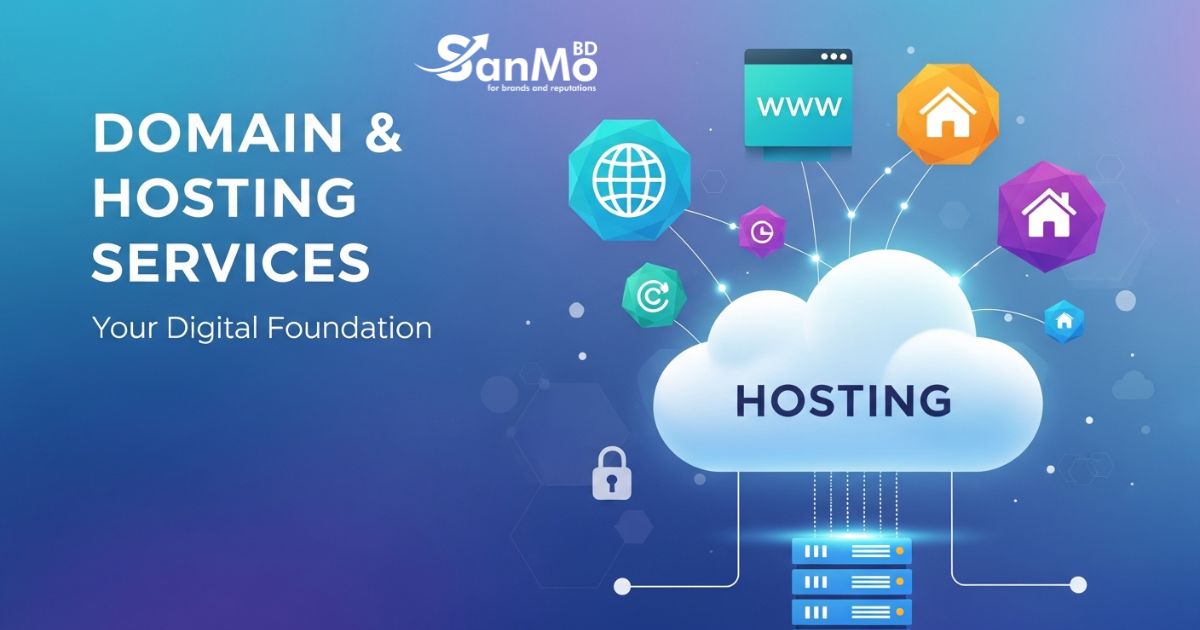
Your website starts with two key decisions: where you buy your domain and who hosts your site. Get these right, and you set the stage for fast load times, strong security, and smooth growth. Get them wrong, and you could face slow pages, frequent downtime, and headaches that follow you for years.
Many new business owners rush this step. They grab the cheapest plan they can find and move on, only to discover hidden fees, poor support, or sluggish performance once their site goes live. The truth is, choosing the right domain and hosting services takes a bit of homework—but it pays off every single day your website is online.
At SanMo BD, we’ve helped countless businesses build their online presence from the ground up. In this guide, we’ll walk you through exactly what to look for in domain and hosting services before you hit “launch.” By the end, you’ll know how to compare providers, spot red flags, and make a choice you won’t regret.
Why Your Choice of Domain & Hosting Services Matters
 Think of your domain as your home address on the internet, and your hosting as the land your house sits on. Both need to be reliable. A great domain name helps people find and remember you, while quality hosting keeps your site running quickly and securely around the clock.
A poor hosting choice can cost you real money. Studies show that a one-second delay in page load time can reduce conversions noticeably. If your pages take too long to open, visitors leave—often before they ever see what you offer. Add in regular downtime, and you risk losing both sales and trust.
Search engines care too. Google factors page speed and uptime into how it ranks websites. A slow or unreliable host can quietly drag down your search visibility, making it harder for new customers to find you. That’s why these early decisions deserve your full attention.
What to Look for in a Domain Name Provider
Before you can launch, you need to register a domain name. Here’s what separates a good domain provider from a frustrating one.
Transparent Pricing and Renewal Rates
Many domain registrars lure you in with a cheap first-year price, then hit you with a much higher renewal cost. Always check the renewal rate before you buy. A domain that costs $1 in year one but $30 in year two might not be the bargain it seems.
Look for providers that show their renewal pricing upfront. Honesty here is a good sign of how they’ll treat you down the road.
Easy Domain Management
You should be able to manage your domain without calling support every time. A clean dashboard lets you update DNS records, set up email forwarding, and renew your domain in just a few clicks. Test how intuitive the control panel feels before you commit.
Free Privacy Protection
When you register a domain, your personal contact details can become public through the WHOIS database. Domain privacy protection hides this information, shielding you from spam and unwanted attention. Some providers charge extra for this, while the best ones include it for free.
Smooth Transfer Options
Your needs might change over time. Make sure your provider allows easy domain transfers without locking you in or charging unfair fees. Flexibility now saves you trouble later.
What to Look for in Web Hosting Services
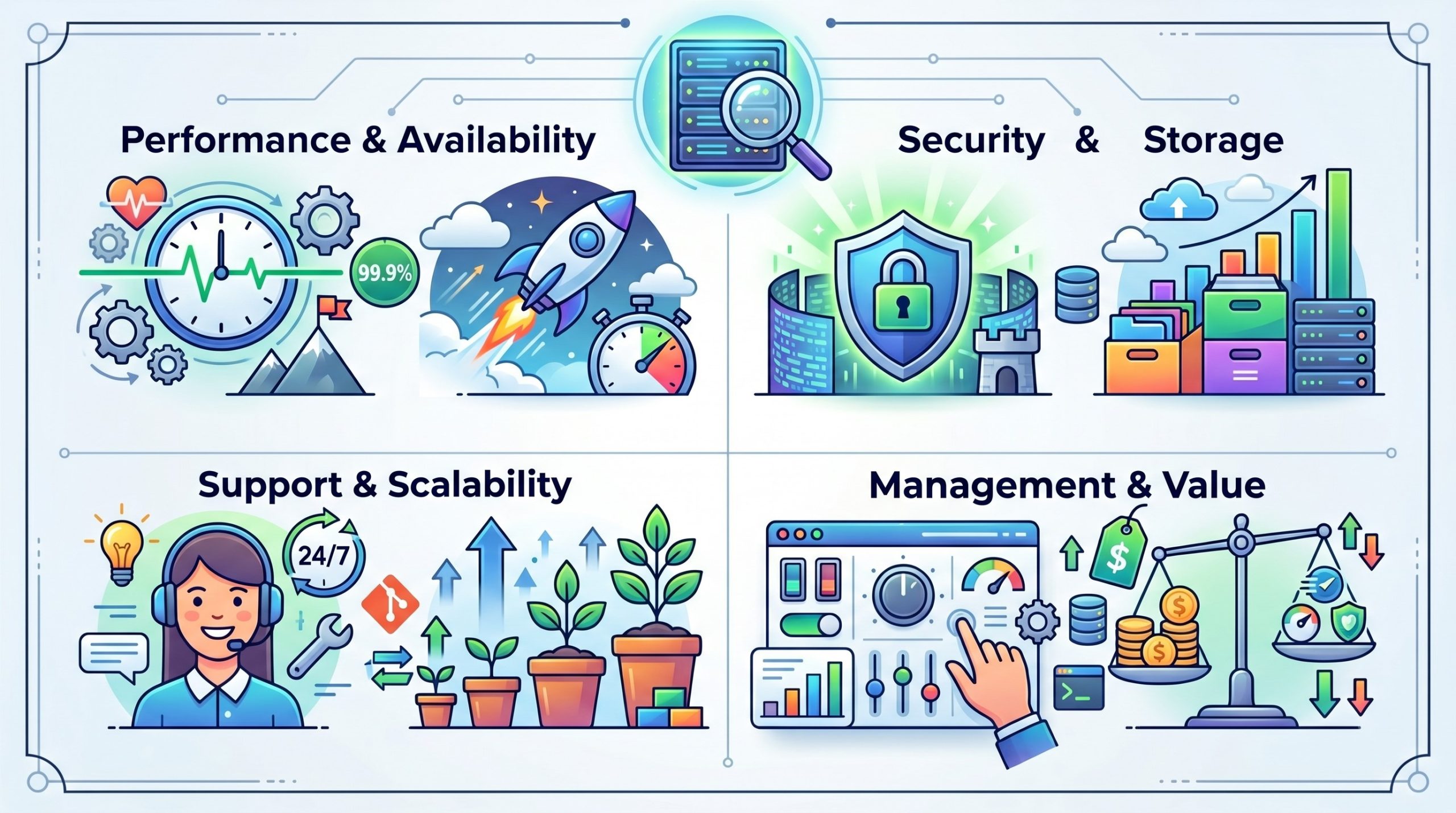 Hosting is where the technical details really matter. Here’s what to prioritize when comparing hosting plans.
Uptime Guarantees
Uptime is the percentage of time your website stays online. Aim for a host that guarantees at least 99.9% uptime. That difference between 99% and 99.9% sounds small, but it adds up—99% uptime means your site could be down for over seven hours a month.
Read the fine print on uptime guarantees. The best providers back theirs with credits or refunds if they fall short.
Loading Speed and Performance
Speed shapes how visitors experience your site. Look for hosts that use SSD storage, modern caching, and a content delivery network (CDN). These features help your pages load fast, no matter where your visitors are located.
If you expect heavy traffic, consider hosts that offer scalable resources so your site won’t crash during busy periods.
Strong Security Features
Security protects your business and your customers. At a minimum, your host should offer:
- Free SSL certificates to encrypt data and show visitors your site is safe
- Regular automatic backups so you can restore your site if something goes wrong
- Firewalls and malware scanning to block threats before they cause damage
- DDoS protection to keep your site online during attacks
Don’t treat security as optional. A single breach can damage your reputation and your bottom line.
Reliable Customer Support
When something breaks at 2 a.m., you want help fast. Choose a host that offers 24/7 support through live chat, phone, or email. Test their response time before you sign up—send a question and see how quickly and clearly they reply.
Good support can turn a stressful problem into a quick fix. Poor support can leave your site down for days.
Room to Grow
Your hosting needs today won’t match your needs in two years. Pick a provider that makes it easy to upgrade your plan as your traffic and business expand. Starting on shared hosting is fine, but make sure you can move to VPS or dedicated hosting without major hassle.
Types of Hosting Explained
Not all hosting is the same. Understanding the main types helps you pick the right fit for your business.
Shared Hosting
With shared hosting, your website shares a server with many others. It’s the cheapest option and works well for small sites and new businesses. The trade-off is that heavy traffic on other sites can slow yours down.
VPS Hosting
A virtual private server (VPS) gives you a dedicated slice of a server’s resources. It costs more than shared hosting but delivers better speed and reliability. VPS hosting suits growing businesses with steady traffic.
Dedicated Hosting
Here, you get an entire server to yourself. It offers top performance and control, but at a higher price. Dedicated hosting fits large sites with heavy traffic and complex needs.
Cloud Hosting
Cloud hosting spreads your site across multiple servers. This setup offers excellent uptime and easy scaling, since your site can draw on more resources whenever it needs them. It’s a smart choice for businesses that expect growth or traffic spikes.
Common Mistakes to Avoid
Even careful buyers slip up. Watch out for these common traps:
- Choosing on price alone: The cheapest plan often comes with hidden costs or weak performance.
- Ignoring renewal rates: That low intro price can balloon at renewal.
- Skipping the fine print: Always read what’s included—and what isn’t.
- Forgetting about support: You’ll appreciate good support the moment something goes wrong.
- Bundling without thinking: Buying your domain and hosting together can be convenient, but compare the costs against buying them separately.
How SanMo BD Helps You Get It Right
Sorting through domain and hosting services on your own can feel overwhelming. That’s where SanMo BD comes in. We help businesses choose, set up, and manage the right domain and hosting solutions for their goals and budget.
Instead of guessing which provider to trust, you get guidance from a team that knows what to look for. We handle the technical details—security, speed, backups, and scaling—so you can focus on running your business. Whether you’re launching your first site or upgrading an existing one, SanMo BD makes the process simple and stress-free.
The Importance of Choosing the Right Domain Extension
 Your domain extension plays a bigger role than many business owners realize. While .com remains the most recognized and trusted option, other extensions such as .net, .org, .co, and country-specific domains can also be effective depending on your goals. A relevant domain extension can strengthen your brand identity, improve credibility, and help customers understand your business focus. For local companies, a country-specific extension may reinforce trust among regional audiences. It’s also wise to secure multiple versions of your domain to protect your brand from competitors or copycats. Choosing the right extension from the start creates a stronger online presence and helps customers find and remember your website more easily.
Why Website Backups Should Never Be Overlooked
Website backups are your safety net when unexpected problems occur. Whether caused by human error, malware, software conflicts, or server failures, data loss can happen without warning. A reliable hosting provider should offer automatic backups that are stored securely and can be restored quickly. Regular backups minimize downtime and help businesses recover important files, customer data, and website content without starting over. Many business owners only realize the importance of backups after experiencing a major issue. By selecting hosting services with robust backup systems, you gain peace of mind knowing your website can be restored efficiently if something goes wrong, protecting both your operations and your reputation.
The Benefits of Professional Email Hosting
A professional email address linked to your domain instantly makes your business appear more credible. Instead of using generic email providers, addresses such as info@yourbusiness.com or support@yourbusiness.com create a stronger impression and reinforce brand recognition. Many hosting providers include email hosting services as part of their packages, making it easy to manage communication from one platform. Professional email solutions also offer better security, spam protection, storage capacity, and administrative control. Customers are more likely to trust and engage with businesses that use branded email addresses. Investing in professional email hosting strengthens your brand image and supports more effective communication with clients and prospects.
How Scalability Supports Long-Term Website Growth
A website that performs well today may struggle tomorrow as traffic increases. That’s why scalability is an essential factor when choosing hosting services. Scalable hosting allows your website to handle growth without major disruptions or costly migrations. As your audience expands, you may need additional storage, bandwidth, processing power, or advanced features. A hosting provider that offers flexible upgrade options makes these transitions much easier. Scalability also helps businesses respond to seasonal traffic spikes, marketing campaigns, and sudden increases in demand. Planning for growth from the beginning prevents performance issues later and ensures your website continues delivering a positive user experience as your business evolves.
The Role of Technical Maintenance in Website Success
Launching a website is only the beginning. Ongoing technical maintenance is essential for keeping your site secure, fast, and fully functional. Software updates, security patches, plugin management, performance optimization, and routine monitoring all contribute to long-term reliability. Neglecting maintenance can lead to security vulnerabilities, broken features, and slower load times that frustrate visitors. Many quality hosting providers offer managed services that handle these technical responsibilities on your behalf. This allows business owners to focus on growth while experts maintain the website’s health. Regular maintenance helps extend the lifespan of your site, improves user experience, and ensures your online presence continues supporting your business goals effectively.
Frequently Asked Questions
What’s the difference between a domain and hosting?
A domain is your website’s address, like yourbusiness.com, that people type into their browser. Hosting is the service that stores your website’s files and makes them available online. You need both to launch a website.
Should I buy my domain and hosting from the same company?
You can, and it’s often convenient to manage everything in one place. However, buying them separately sometimes gives you better pricing and more flexibility. Compare both options before deciding.
How much should I expect to pay for domain and hosting services?
A domain typically costs $10 to $20 per year. Hosting varies widely—shared hosting can start around $3 to $10 a month, while VPS, dedicated, or cloud hosting costs more. Always check renewal rates, not just intro prices.
What uptime should I look for in a hosting provider?
Aim for a hosting provider that guarantees at least 99.9% uptime. This keeps your website available almost all the time and helps protect your sales and search rankings.
Can I change my hosting provider later?
Yes. Most websites can be migrated to a new host, though the process takes some technical know-how. Choosing a provider with easy transfer options and good support makes future moves much smoother.
Final Thoughts Before You Launch
Choosing the right domain and hosting services is one of the most important steps in building a successful website. Take your time, compare providers carefully, and prioritize reliability, security, and support over rock-bottom prices. The right foundation today will save you money, time, and frustration tomorrow.
Ready to launch your website with confidence? Reach out to SanMo BD, and let’s build your online presence the right way—from the very first click.