Your website is often the first interaction a potential customer has with your business. Before they read a single review, speak to your team, or try your product, they’ve already formed an opinion—based entirely on your website. Research by Stanford University found that 75% of users judge a company’s credibility based on its website design alone. That’s a significant amount of trust riding on fonts, colors, and load times.
Web design and development have become non-negotiable pillars of business success. A well-built website doesn’t just look good—it works hard behind the scenes to attract visitors, communicate your value, and convert browsers into buyers. Whether you’re launching a new venture or scaling an established brand, your website is the digital backbone of everything you do.
This post breaks down what web design and development actually involve, why they matter so much for business growth, and what to look for when building or improving your site. If you’ve been treating your website as an afterthought, this is the wake-up call you need.
What Is Web Design & Development—and Why Does It Matter?
People often use “web design” and “web development” interchangeably, but they’re two distinct disciplines that work in tandem.
Web design covers everything a user sees and interacts with—the visual layout, color palette, typography, imagery, and overall user experience (UX). A great web designer thinks like both an artist and a psychologist, crafting pages that are visually compelling and intuitively easy to navigate.
Web development is what powers the experience under the hood. Front-end development translates designs into functional code that renders in a browser. Back-end development handles servers, databases, and all the logic that makes a site dynamic and functional. Full-stack developers work across both.
Together, web design and development determine how your site looks, how it performs, how easily it can be found on search engines, and whether visitors stay long enough to take action.
For businesses operating online—which today means virtually every business—this combination is foundational.
How Does Web Design Impact User Experience and Conversions?
 A well-designed website guides visitors toward a goal. That goal might be making a purchase, submitting a contact form, booking a call, or signing up for a newsletter. Every design decision, from button placement to page hierarchy, either supports or undermines that goal.
Poor design creates friction. Confusing navigation, cluttered layouts, and inconsistent branding all give visitors reasons to leave. A clean, purposeful design, on the other hand, builds trust and reduces the mental effort required to take action.
The role of visual hierarchy in guiding attention
Visual hierarchy refers to the arrangement of elements on a page to guide the viewer’s eye. Headlines draw attention first, then supporting text, then calls to action. When designed well, a user moves naturally through a page without having to think about where to look next.
SanMo BD approaches web design with this principle at the core—ensuring every element on a page earns its place and serves the broader conversion goal.
Why mobile responsiveness is no longer optional
Mobile devices account for more than half of all global web traffic. A site that looks polished on a desktop but breaks on a smartphone is actively losing business. Google’s mobile-first indexing means search engines also prioritize mobile-friendly sites when ranking pages.
Responsive web design ensures your site adapts seamlessly across screen sizes—phones, tablets, and desktops alike. This isn’t a luxury feature; it’s a baseline requirement.
What Role Does Web Development Play in Business Performance?
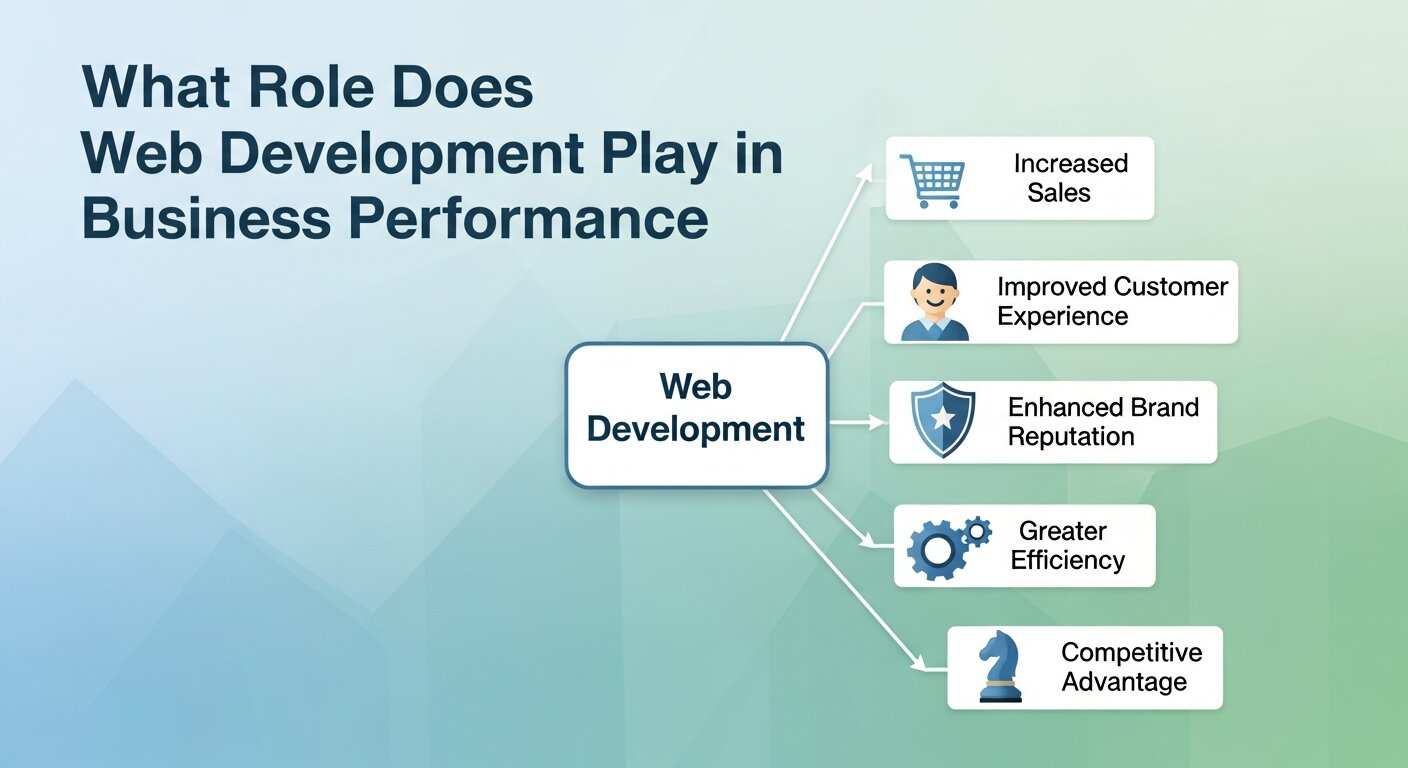 Design may win hearts, but development keeps the engine running. Behind every smooth, fast, reliable website is a solid technical foundation built by skilled developers.
Page speed and its direct impact on revenue
Slow websites are expensive. According to Google, 53% of mobile users abandon a site that takes longer than three seconds to load. Every additional second of load time correlates with a measurable drop in conversions.
Fast-loading pages require optimized code, compressed images, efficient hosting, and smart caching strategies—all areas where professional web development makes a tangible difference.
Security as a business priority
Cybersecurity threats are a growing concern for businesses of all sizes. A compromised website can damage your reputation, expose customer data, and result in costly downtime. Proper development practices—including SSL certificates, secure coding standards, and regular updates—protect both your site and your users.
For e-commerce businesses, especially, security is directly tied to customer trust. Shoppers won’t enter payment details on a site that doesn’t feel safe.
Scalability: building for where you’re going, not just where you are
Startups and small businesses often make the mistake of building a site that suits their current needs without thinking ahead. As your business grows, so do the demands on your website—more traffic, more products, more integrations.
A well-developed site is built to scale. That means clean, modular code, a content management system (CMS) that can handle growth, and architecture that doesn’t need to be rebuilt from scratch every time you expand.
Why SEO Must Be Baked Into Web Design & Development
Search engine optimization (SEO) and web design and development aren’t separate strategies—they’re deeply intertwined. A beautifully designed site that nobody can find serves little purpose.
Technical SEO: the developer’s domain
Technical SEO covers the behind-the-scenes elements that affect how search engines crawl and index your site. This includes site speed, mobile responsiveness, structured data markup, clean URL structures, and proper use of header tags.
These aren’t add-ons. They need to be built into the site from the start, which is why involving SEO considerations during the development phase—not after—is critical.
On-page design elements that affect rankings
Font readability, content layout, image alt text, and internal linking structures all contribute to how well a page performs in search results. Design choices that seem purely aesthetic often have SEO implications.
For example, using a JavaScript-heavy design that search engine bots struggle to crawl can invisibly tank your rankings. Choosing the wrong CMS can make it difficult to optimize page titles and metadata efficiently.
SanMo BD integrates SEO best practices throughout the design and development process, so your site is built to be found—not just built to look good.
What Makes a High-Performing Business Website in 2026?
Not all websites are created equal. The difference between a site that generates leads and one that collects dust usually comes down to a handful of critical factors.
Clear value proposition: Within seconds of landing on your homepage, visitors should know exactly who you are, what you do, and why it matters to them. Ambiguity kills conversions.
Intuitive navigation: Users shouldn’t need a map to find what they’re looking for. Logical menu structures, a visible search function, and clear categories reduce friction and improve time-on-site.
Compelling calls to action (CTAs): Every page should have a purpose, and CTAs should make the next step obvious. “Get a Free Quote,” “Book a Demo,” and “Start Your Free Trial” are all direct, action-oriented, and clear.
Consistent branding: Colors, fonts, imagery, and tone of voice should be consistent across every page. Inconsistency signals a lack of professionalism and erodes trust.
Accessible design: Web accessibility—ensuring your site can be used by people with disabilities—is both an ethical responsibility and a legal consideration in many markets. Accessible design also tends to improve usability for everyone.
Fast, reliable hosting: Great design and development mean nothing if your site is constantly going offline or loading at a crawl. Quality hosting is the infrastructure your site depends on.
When Should a Business Invest in Professional Web Design & Development?
The honest answer: sooner than most businesses think.
Many small businesses start with a DIY website builder and grow frustrated when their site doesn’t generate results. The problem usually isn’t effort—it’s the limitations of template-based tools. They can get you online quickly, but they rarely deliver the performance, customization, and scalability that drive real business growth.
If your website isn’t generating leads or sales at the rate your business needs, that’s the clearest signal to invest in professional web design and development.
Other signs it’s time to upgrade:
- Your site looks noticeably outdated compared to competitors
- It loads slowly or doesn’t display correctly on mobile
- Your bounce rate is high and conversion rate is low
- You can’t easily update content without technical help
- Your brand has evolved but your website hasn’t kept up
Your Website Deserves More Than a Template
 A great website isn’t a finished product—it’s a living asset that grows with your business. The businesses that thrive online aren’t the ones that launched the flashiest site; they’re the ones that invested in a solid foundation and kept building on it.
Web design and development, done right, combine creativity with engineering to produce something greater than the sum of its parts. The visual experience draws people in. The technical performance keeps them there. The strategic structure converts them into customers.
If your website isn’t doing all three, it’s leaving money on the table. Now is the time to change that.
The Importance of Website Maintenance After Launch
Launching a website is only the beginning of its journey. To maintain performance, security, and user satisfaction, regular website maintenance is essential. This includes updating plugins and software, fixing broken links, monitoring page speed, backing up data, and ensuring compatibility with new browsers and devices. Ongoing maintenance also helps identify technical issues before they affect your visitors or search engine rankings. As your business grows, your website should evolve with new content, features, and functionality that meet changing customer needs. A well-maintained website remains reliable, secure, and competitive, allowing your business to deliver a consistently positive user experience while supporting long-term digital growth.
How Professional Web Design & Development Supports Business Growth
 A professionally designed and developed website is more than an online presence—it is a powerful business asset. It strengthens your brand image, improves customer trust, and creates a seamless experience that encourages visitors to take action. Beyond appearance, professional development ensures your website is fast, secure, scalable, and optimized for search engines from the ground up. As your business expands, your website can easily accommodate new services, products, and integrations without sacrificing performance. Investing in expert web design and development also reduces long-term maintenance costs by building a strong technical foundation. The result is a website that not only attracts visitors but also converts them into loyal customers and supports sustainable business success.
Frequently Asked Questions
What is the difference between web design and web development?
Web design focuses on the visual and experiential aspects of a website—layout, colors, typography, and user experience. Web development is the technical process of building and coding the site so it functions correctly. Both disciplines are essential to creating a website that looks good and works well.
How long does it take to build a professional website?
The timeline depends on the complexity of the project. A straightforward business website typically takes four to eight weeks from initial briefing to launch. Larger e-commerce platforms or custom web applications can take several months. Working with an experienced team like SanMo BD helps keep projects on schedule and on brief.
How much does professional web design and development cost?
Costs vary widely based on scope, features, and the experience of the team you work with. A basic business site will cost significantly less than a custom e-commerce platform with advanced functionality. The key is to view it as an investment—a well-built site that converts visitors into customers pays for itself many times over.
Why is my website not showing up on Google?
There are several possible reasons: the site may not be indexed yet, it may have technical SEO issues, or it may lack the content and authority needed to rank competitively. A professional web development team can conduct an audit to identify and resolve the specific issues affecting your visibility.
Can I update my website myself after it’s been built?
Most professionally built websites use a content management system (CMS) like WordPress, which allows non-technical users to update text, images, and blog posts without writing code. Your development team should provide training and documentation so you’re confident managing day-to-day content updates.
Is it worth redesigning an existing website, or should I build a new one?
It depends on the current state of your site. If the underlying structure is solid but the design feels outdated, a redesign may be sufficient. If the site has deep technical issues, is difficult to maintain, or no longer reflects your brand, a full rebuild is often more cost-effective in the long run.
Building Your Digital Foundation with SanMo BD
SanMo BD specializes in web design and development solutions that combine aesthetic quality with technical excellence. The team works closely with businesses to understand their goals, audience, and competitive landscape—then builds digital experiences that deliver results.
From strategy and design through to development and ongoing support, SanMo BD provides end-to-end expertise for businesses that take their online presence seriously. The focus is always on building websites that don’t just exist—they perform.