Publishing content is easy. Publishing content that actually performs? That’s a different challenge entirely. Most businesses invest significant time and resources into creating blog posts, landing pages, and social media content—only to watch it disappear into the void. No traffic. No shares. No leads. The issue usually isn’t the content itself. It’s that the content hasn’t been optimized to compete.
Advanced content optimization goes far beyond stuffing keywords into a headline or hitting a word count target. It’s a deliberate, multi-layered process that aligns your content with search intent, demonstrates genuine expertise, earns authoritative backlinks, and delivers a reading experience compelling enough to keep your audience coming back. Done right, it transforms your content from a cost center into one of your most powerful growth assets.
This guide breaks down what advanced content optimization looks like in practice—and how SanMo BD helps businesses execute it at every level.
What Does Advanced Content Optimization Actually Mean?
Basic content optimization means adding a target keyword to your title, URL, and meta description. Advanced content optimization builds on that foundation with a much broader toolkit.
At its core, advanced optimization addresses three interconnected goals:
- Quality: Is the content accurate, comprehensive, and genuinely useful to the reader?
- Authority: Does the content signal expertise and earn trust from both readers and search engines?
- Reach: Is the content structured and distributed in a way that maximizes its visibility across channels?
Each of these goals requires its own set of strategies. Let’s unpack them.
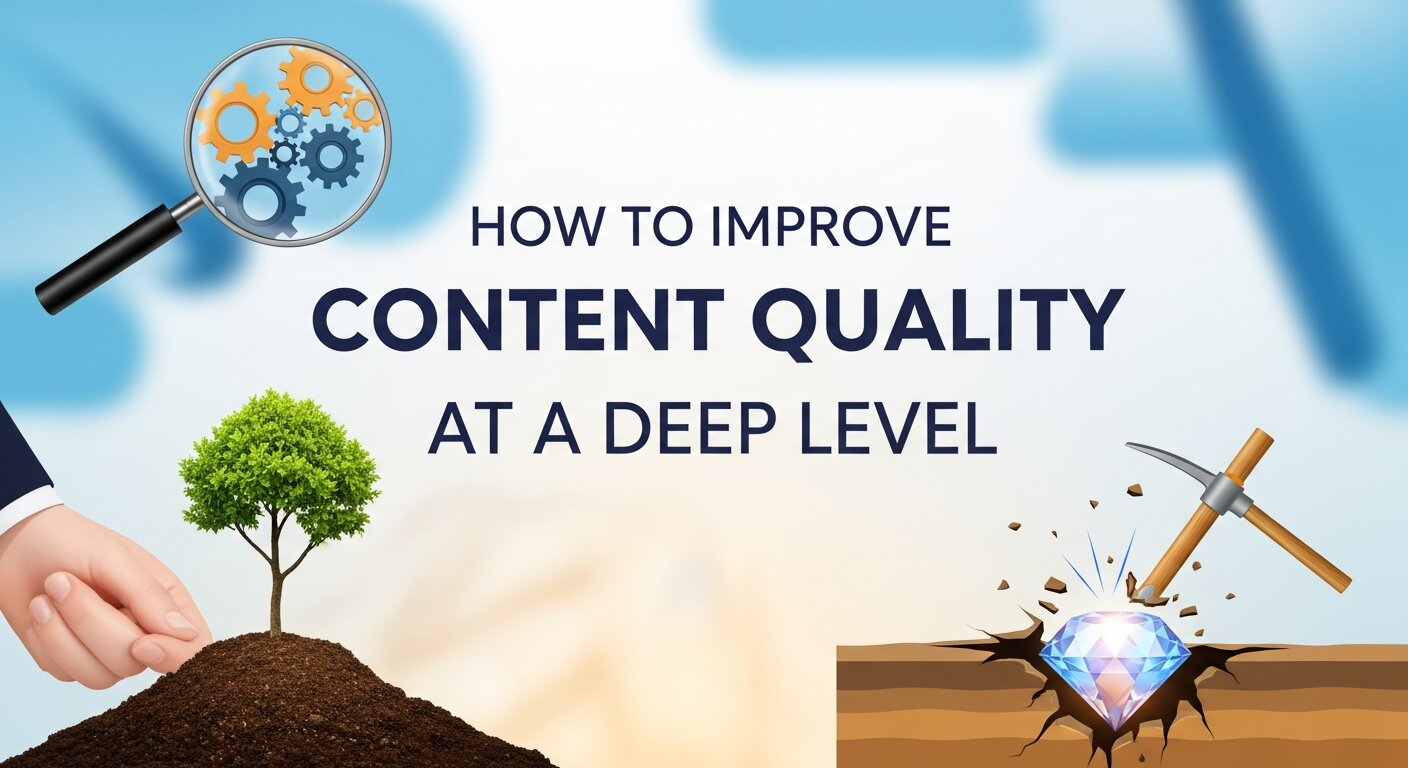
How to Improve Content Quality at a Deep Level
Align Content with Search Intent—Not Just Keywords
Keywords tell you what people are searching for. Search intent tells you why they’re searching for it. A user typing “advanced content optimization” might be looking for a definition, a how-to guide, a tool comparison, or a checklist. Serving the wrong format—even with perfect keyword placement—results in high bounce rates and poor engagement signals.
Before writing, analyze the top-ranking results for your target keyword. Are they listicles, long-form guides, case studies, or landing pages? Match the dominant format. This single step often has a greater impact on rankings than any on-page tweak.
Use Semantic SEO to Cover a Topic Completely
Search engines have grown sophisticated enough to understand topics, not just terms. Semantic SEO means covering the full breadth of a subject—related subtopics, commonly asked questions, adjacent concepts—so that your content becomes the most comprehensive resource on the page.
Tools like topic clustering help here. Instead of writing isolated posts about loosely connected subjects, you build a hub-and-spoke model: one authoritative pillar page supported by several detailed cluster articles, all interlinked. This structure signals topical depth to search engines and makes navigation intuitive for readers.
Write for Readability, Not Just Algorithms
High-quality content reads well. That means varied sentence lengths, clear transitions, and a structure that respects the reader’s time. Aim for a Flesch reading-ease score of 60 or above—a benchmark that indicates your content is accessible to a broad audience without sacrificing depth or nuance.
Subheadings should do more than break up walls of text. They should guide the reader through a logical progression of ideas, making it easy to skim and still extract value. Bullet points work well for lists and comparisons but should not replace actual analysis and explanation.
How to Build Content Authority That Search Engines Recognize
Demonstrate E-E-A-T in Every Piece
Google’s quality guidelines place heavy emphasis on E-E-A-T: Experience, Expertise, Authoritativeness, and Trustworthiness. For content to rank consistently in competitive spaces, it needs to reflect real-world knowledge and credibility—not just surface-level information that any AI tool could generate.
Practical ways to demonstrate E-E-A-T include:
- Citing reputable, named sources and data points
- Including author bios with verifiable credentials
- Linking to primary sources rather than secondary summaries
- Keeping factual content updated as information evolves
Earn Backlinks Through Content Worth Citing
Backlinks remain one of the most powerful ranking signals in search. But earning them requires creating content that others genuinely want to reference. Original research, industry surveys, detailed data breakdowns, and well-designed visual assets consistently attract links more effectively than generic how-to posts.
A targeted outreach strategy amplifies this. Identifying sites that have linked to similar content in your niche—then reaching out with a more comprehensive or up-to-date alternative—is a proven method for building a healthy backlink profile.
Optimize Internal Linking with Purpose
Internal links serve a dual function: they help search engines crawl and index your site more effectively, and they guide readers to related content that extends their session. The key is to link with intention. Each internal link should connect genuinely related pieces of content using descriptive anchor text that tells both the reader and the search engine what the linked page is about.
Avoid internal linking purely for the sake of it. Irrelevant links dilute the user experience and can confuse search engine crawlers about the relationship between pages.
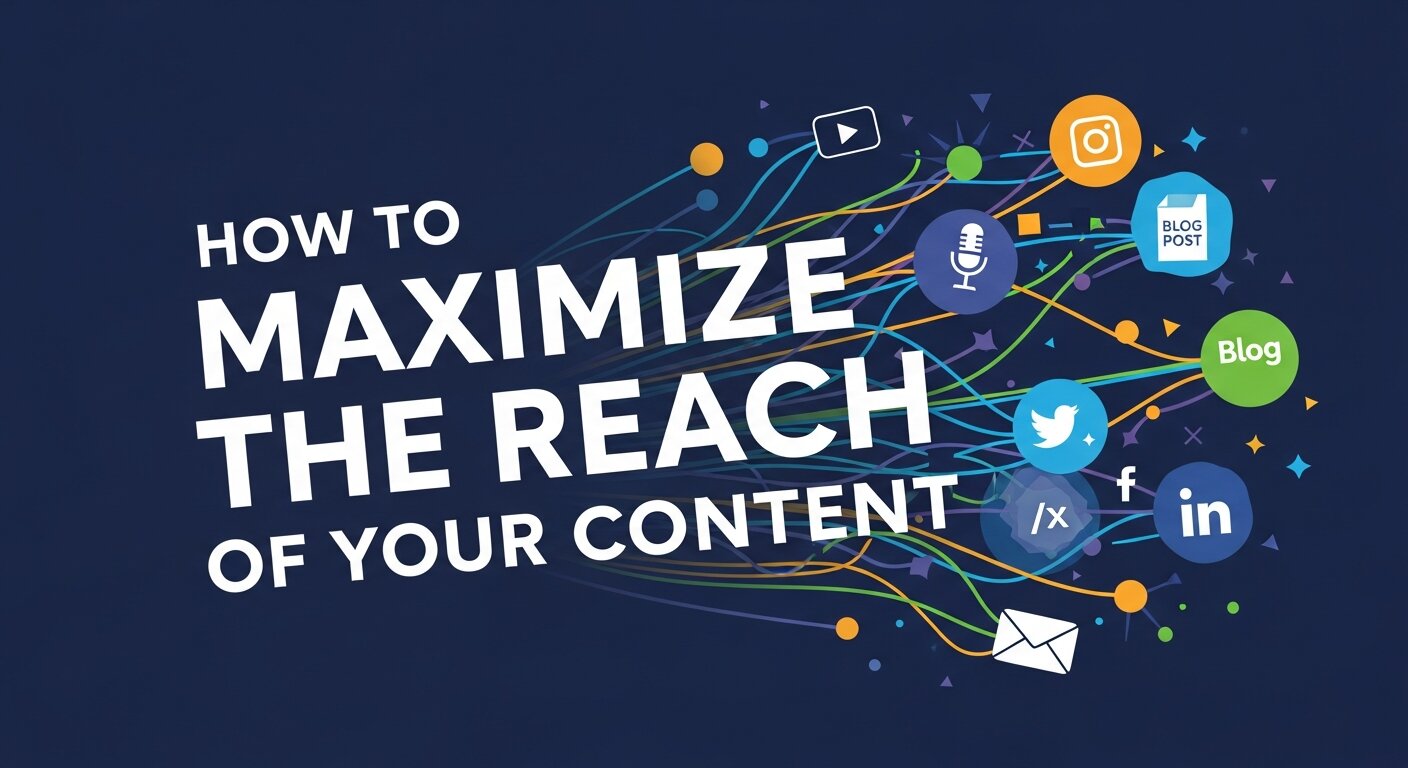
How to Maximize the Reach of Your Content
Repurpose Content Across Multiple Formats and Channels
A well-researched blog post contains far more value than a single article can extract. The same core content can be adapted into a LinkedIn carousel, a short-form video script, an email newsletter section, an infographic, or a podcast talking point. Each format reaches a different segment of your audience on a different platform.
This is where many businesses leave significant reach on the table. Repurposing is not copying and pasting—it’s reformatting and re-contextualizing your strongest ideas for different consumption habits. A data-heavy section of a blog post, for example, often works better as a visual asset than as paragraphs.
Prioritize Content Updates Over Constant New Creation
Producing new content at scale feels productive. But refreshing and expanding high-performing existing content often delivers a better return on investment. Search engines favor content that is accurate and current. A post that ranked well two years ago may have slipped not because the topic lost relevance, but because the information aged and competitors published fresher alternatives.
Conduct a content audit every six to twelve months. Identify posts with declining traffic, outdated statistics, or thin coverage of subtopics that have since become relevant. Update them, expand them, and republish them with a current date. The results can be dramatic.
Optimize for Core Web Vitals and On-Page Experience
Content optimization extends beyond the words on the page. Google’s Core Web Vitals—which measure loading speed, visual stability, and interactivity—directly influence how content ranks. A beautifully written article buried on a slow-loading, poorly structured page will underperform against a well-optimized competitor, even if the writing is superior.
Compress images, minimize render-blocking scripts, and ensure your content is fully accessible on mobile devices. These technical improvements are not separate from content strategy—they are part of it.
How SanMo BD Approaches Advanced Content Optimization
SanMo BD takes a results-driven approach to advanced content optimization, combining data-led strategy with high-quality execution. From keyword research and content architecture to on-page refinement and distribution planning, SanMo BD works with businesses to ensure their content doesn’t just exist—it competes.
Whether you’re building a content strategy from the ground up or auditing an existing library that isn’t delivering results, SanMo BD’s process is built around one central principle: every piece of content should earn its place through measurable impact.
The Metrics That Actually Matter in Content Optimization
Vanity metrics—page views, social likes, raw impressions—tell you that content is being seen. They don’t tell you whether it’s performing. For advanced content optimization, the metrics that matter most include:
- Organic search rankings for target and related keywords
- Click-through rate (CTR) from search results, which reflects the strength of your meta title and description
- Average time on page and scroll depth, which indicate content quality and engagement
- Conversion rate, measuring how effectively content drives the desired action
- Backlink acquisition, tracking whether content earns external citations over time
Tracking these metrics consistently allows you to identify what’s working, what needs improvement, and where new opportunities exist.
Using AI Tools to Enhance Content Optimization
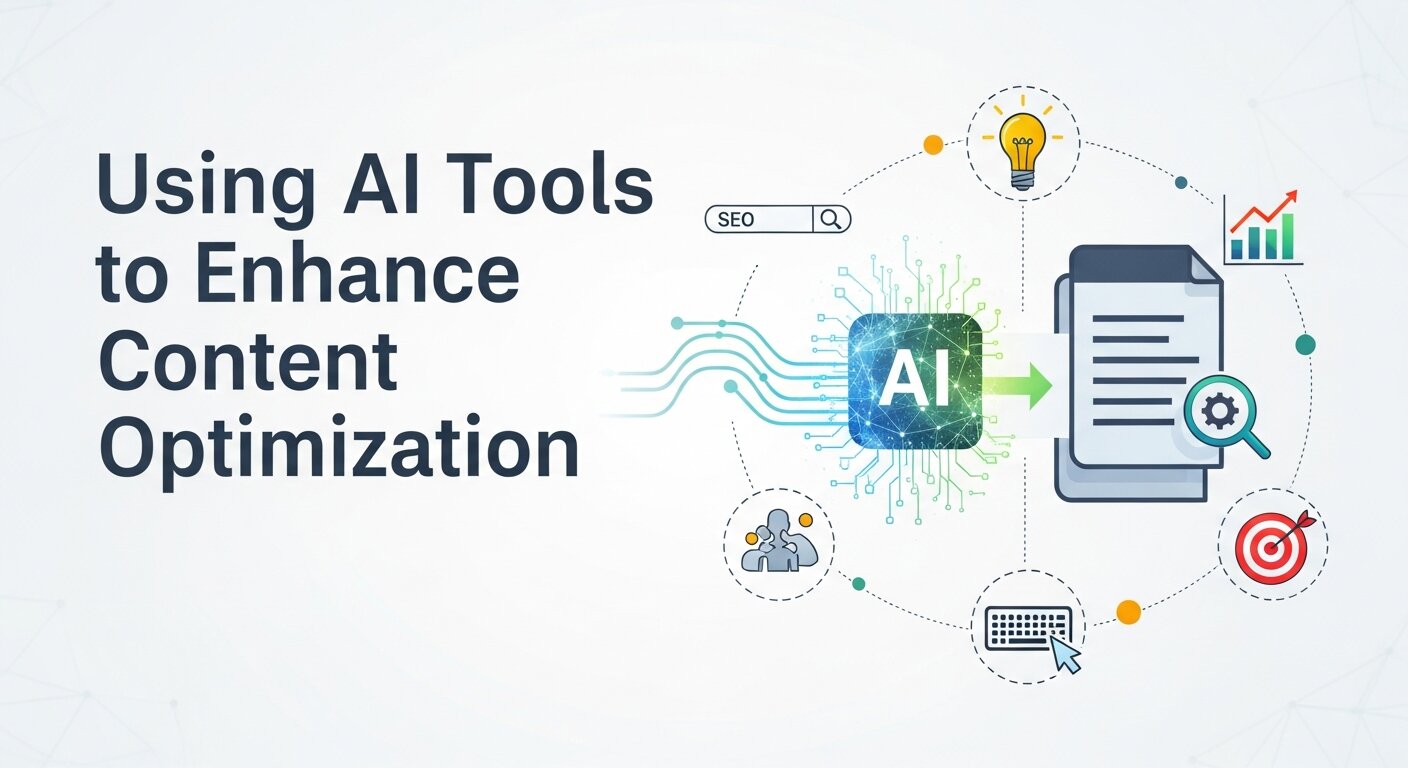 Artificial intelligence has become a valuable asset in advanced content optimization when used strategically. AI-powered tools can help identify content gaps, analyze competitor pages, generate topic ideas, and recommend semantic keywords that strengthen topical relevance. They also assist with readability improvements, headline testing, and content structure optimization. However, AI should support—not replace—human expertise. Every AI-generated suggestion should be reviewed for accuracy, originality, and brand consistency before publication. Combining AI efficiency with human insight creates content that is informative, trustworthy, and aligned with user intent. Businesses that integrate AI into their optimization workflow can produce higher-quality content faster while maintaining the authenticity that both readers and search engines value.
Strengthening User Engagement Through Better Content Experience
Search engines increasingly evaluate how users interact with content after they click a page. Improving user engagement means creating an experience that keeps visitors reading, exploring, and taking action. Use clear headings, concise paragraphs, visual elements, comparison tables, and relevant internal links to make information easier to consume. Include actionable insights instead of generic advice, and guide readers naturally toward related resources or conversion points. Fast loading speeds, mobile responsiveness, and accessible formatting also contribute to a positive user experience. When visitors spend more time on your website and interact with multiple pages, search engines interpret those signals as indicators of quality, helping improve long-term organic performance.
Creating a Scalable Content Optimization Workflow
As a content library grows, optimization becomes difficult without a structured workflow. Establish a repeatable process that includes regular content audits, keyword performance reviews, technical SEO checks, and content refresh schedules. Prioritize pages based on traffic potential, declining rankings, and business value to maximize return on effort. Maintain documentation of updates, optimization dates, and performance changes to track long-term improvements. Collaboration between content writers, SEO specialists, and technical teams ensures every optimization aligns with overall marketing goals. A scalable workflow not only improves efficiency but also keeps your website competitive as search algorithms, customer expectations, and industry trends continue to evolve.
Frequently Asked Questions
What is advanced content optimization?
Advanced content optimization is the process of improving content quality, search authority, and distribution reach beyond basic keyword usage. It includes semantic SEO, E-E-A-T signals, internal linking strategy, Core Web Vitals improvements, content repurposing, and regular content audits.
How is advanced content optimization different from basic SEO?
Basic SEO focuses on foundational elements like keyword placement, meta tags, and title structures. Advanced content optimization builds on this by addressing topical authority, search intent alignment, backlink strategy, on-page experience, and multi-channel reach—treating content as a complete business asset rather than a checkbox exercise.
How long does it take to see results from content optimization?
Results vary depending on your domain authority, competition level, and the extent of changes made. Minor updates to existing content can show results within a few weeks. Broader strategy implementations, such as building topic clusters or earning backlinks, typically take three to six months to produce measurable organic growth.
Should I focus more on creating new content or optimizing existing content?
Both matter, but many businesses underinvest in existing content. Refreshing and expanding high-performing posts often yields faster and more cost-effective results than producing net-new content. A content audit helps identify which existing assets have the most optimization potential.
What role does E-E-A-T play in content optimization?
E-E-A-T—Experience, Expertise, Authoritativeness, and Trustworthiness—is a core component of Google’s quality evaluation framework. Content that demonstrates genuine expertise, cites credible sources, and builds a trusted author profile tends to perform better in competitive search environments, particularly in fields like finance, health, and business services.
How can SanMo BD help with advanced content optimization?
SanMo BD provides end-to-end content optimization services, from strategic keyword research and content architecture to on-page refinement and performance tracking. The focus is on building content that ranks, engages, and converts—backed by a data-driven process tailored to your business goals.
Stop Publishing and Start Optimizing
Creating more content is rarely the answer to poor content performance. Creating better, more strategically optimized content—and distributing it with intention—is.
Advanced content optimization is a discipline that rewards consistency and precision. Every heading, every internal link, every metadata field, and every distribution decision either adds to or detracts from your content’s ability to rank, resonate, and convert. The businesses that treat content as a strategic asset, rather than a publishing exercise, are the ones that compound their results over time.
If you’re ready to take your content strategy to the next level, SanMo BD has the expertise and the process to get you there.