Selling online sounds straightforward—until you realize how much happens behind the scenes every time a customer clicks “Buy Now.” Within seconds, financial data travels across multiple systems, security checks fire in the background, and funds are authorized before the confirmation screen even loads. For businesses managing this process without the right infrastructure, the cracks show fast: failed transactions, frustrated customers, and revenue slipping through the gaps.
Payment gateway solutions fix that. They serve as the connective tissue between your online store, your customers’ banks, and your payment processor—handling authentication, encryption, and communication so that you don’t have to. And as digital commerce continues to grow, choosing the right payment gateway has become one of the most consequential decisions a business can make.
This post breaks down exactly how payment gateway solutions work, why they matter, and what to look for when choosing one. Whether you’re launching your first e-commerce store or scaling an established operation, understanding this technology will help you make smarter, faster decisions.
What Is a Payment Gateway Solution?
A payment gateway is a technology that authorizes and processes online transactions. Think of it as the digital equivalent of a point-of-sale terminal in a physical store—except it operates entirely online, processing card details, verifying funds, and approving or declining payments in real time.
When a customer enters their card details on your website, the payment gateway encrypts that data and sends it to the payment processor. The processor communicates with the customer’s bank, which either approves or declines the transaction. The entire process typically takes two to three seconds.
Without a payment gateway, there’s no secure, reliable way to accept payments online. It’s as fundamental to e-commerce as a shopping cart or product page.
How Do Payment Gateway Solutions Simplify Online Payment Processing?
 The word “simplify” does a lot of heavy lifting here. Payment gateways don’t just move money—they remove friction at every stage of the transaction process. Here’s how.
Automating the Authorization Process
Manual payment verification is slow, error-prone, and completely impractical at scale. Payment gateway solutions automate the entire authorization chain, from the moment a customer submits their card details to the moment funds are confirmed. This automation eliminates the need for human intervention on individual transactions, freeing up business resources while dramatically reducing processing time.
Securing Sensitive Customer Data
Data security is non-negotiable in online payments. Payment gateways use Transport Layer Security (TLS) encryption and tokenization to protect card information during transmission. Tokenization replaces actual card numbers with unique identifiers, meaning your systems never store sensitive financial data directly.
Most reputable payment gateways are also PCI-DSS compliant (Payment Card Industry Data Security Standard). Achieving and maintaining that certification independently would be a significant undertaking for most businesses—using a compliant gateway handles it for you.
Supporting Multiple Payment Methods
Customers pay differently depending on where they are, what device they’re on, and what they prefer. A strong payment gateway solution supports credit and debit cards, digital wallets like Apple Pay and Google Pay, bank transfers, and increasingly, buy-now-pay-later options.
Offering multiple payment methods directly impacts conversion rates. Forcing customers into a single payment flow is one of the leading causes of cart abandonment—and it’s an easy problem to solve with the right gateway.
Enabling Real-Time Transaction Monitoring
Modern payment gateways come with dashboards and reporting tools that give businesses real-time visibility into transactions. You can track successful payments, failed attempts, refund requests, and chargebacks from a single interface. This level of visibility makes it far easier to spot anomalies, resolve disputes quickly, and maintain accurate financial records.
Reducing Failed Transactions With Smart Routing
Failed transactions are expensive—not just in lost revenue, but in customer trust. Advanced payment gateway solutions use smart routing to direct transactions through the most reliable processing path. If one route fails, the system automatically reroutes to an alternative, increasing the likelihood of a successful payment without any action required from the customer.
Key Features to Look for in a Payment Gateway Solution
Not all payment gateways are built the same. When evaluating options for your business, these are the features that matter most.
Security and Compliance Standards
Look for gateways that are PCI-DSS Level 1 compliant—the highest level of certification. Beyond that, check for 3D Secure authentication, fraud detection algorithms, and data encryption. Security gaps at the payment stage can lead to data breaches, chargebacks, and reputational damage.
Integration Flexibility
Your payment gateway needs to work with your existing tech stack. Most gateways offer plugins or native integrations for major e-commerce platforms like Shopify, WooCommerce, and Magento. If you run a custom-built site, look for a gateway with a well-documented API that your development team can work with efficiently.
Transaction Fees and Pricing Structure
Payment gateways typically charge a combination of per-transaction fees and monthly service fees. Some add percentage-based charges on top. It’s important to model your projected transaction volume against each gateway’s fee structure—what looks like a small difference in rates can translate to high costs at scale.
Customer Support and Reliability
Payment failures during peak traffic periods can be catastrophic. Choose a gateway provider that offers 24/7 technical support and publishes uptime guarantees. Check independent reviews for response times and how effectively support teams resolve issues under pressure.
Multi-Currency and Cross-Border Capabilities
If you sell internationally—or plan to—your gateway must handle multi-currency transactions and cross-border payments. This includes currency conversion, compliance with regional regulations, and support for locally preferred payment methods.
How SanMo BD Approaches Payment Gateway Integration
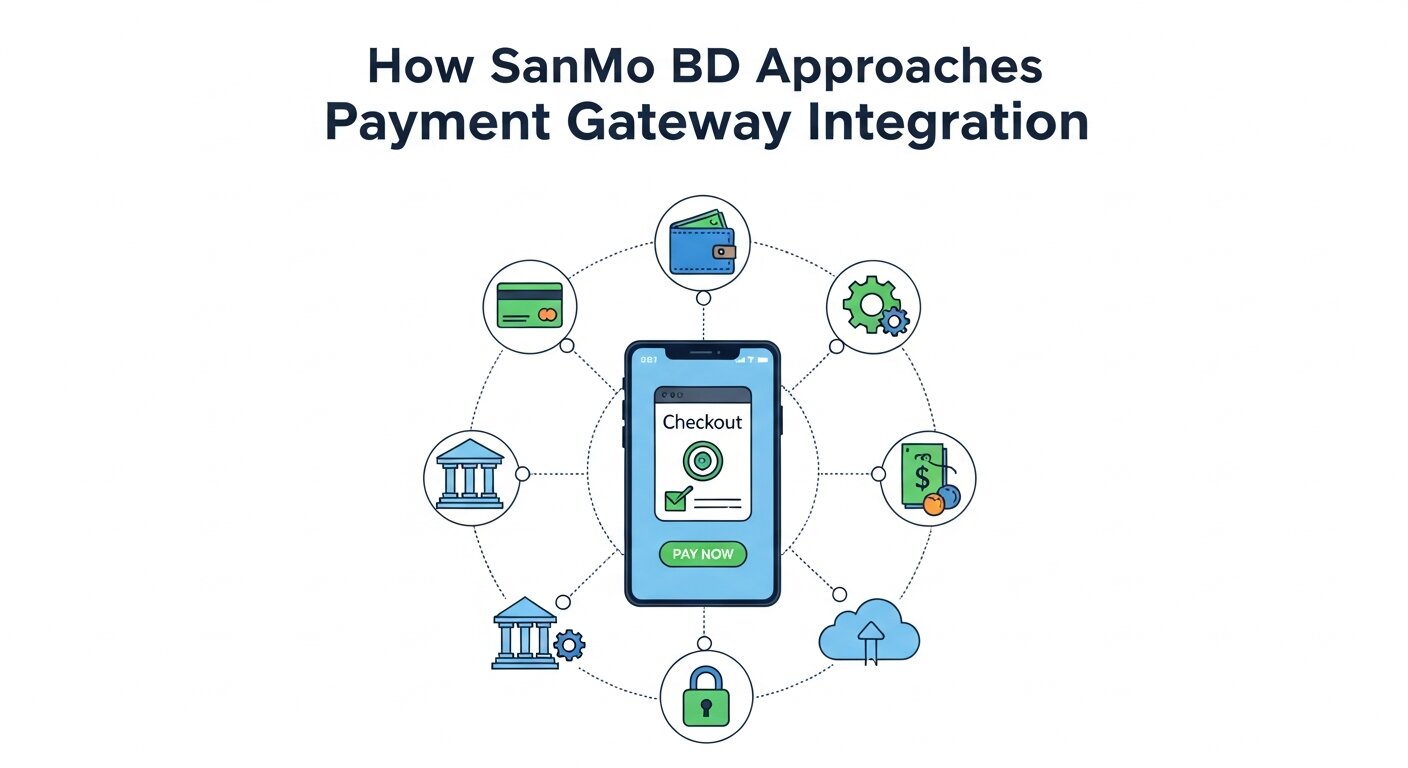 SanMo BD works with businesses to implement payment gateway solutions that are secure, scalable, and tailored to their operational needs. Rather than applying a one-size-fits-all approach, SanMo BD assesses each client’s transaction volume, target markets, and existing platform infrastructure before recommending or configuring a gateway solution.
The focus is always on minimizing friction—both for the end customer completing a purchase and for the business managing payments on the back end. From initial integration to ongoing technical support, SanMo BD ensures that payment processing works reliably without becoming a burden on internal teams.
Common Payment Gateway Challenges—and How to Avoid Them
Even with a good gateway in place, businesses run into predictable problems. Here’s what to watch out for.
High Cart Abandonment Rates
A complicated or unfamiliar checkout experience pushes customers away. Keep your payment flow short, display trusted security badges, and offer guest checkout. Every additional step between “add to cart” and “payment confirmed” is an opportunity for drop-off.
Chargebacks
Chargebacks occur when customers dispute a transaction with their bank. They’re costly and time-consuming. Reduce chargeback risk by using 3D Secure authentication, maintaining clear refund policies, and keeping accurate transaction records.
Integration Issues
Poorly integrated gateways create bugs, broken checkout flows, and inconsistent user experiences. Always test thoroughly in a staging environment before going live, and ensure your gateway provider offers developer support during the integration phase.
Currency and Compliance Gaps
Selling across borders without proper gateway configuration leads to declined transactions and compliance issues. Work with a provider—or an integration partner like SanMo BD—who understands regional payment regulations and can configure your gateway accordingly.
The Business Case for Investing in the Right Payment Gateway
A payment gateway is not just a technical requirement—it’s a revenue-affecting business tool. Faster checkouts, fewer failed transactions, and broader payment method support all contribute directly to conversion rates and customer retention.
Businesses that treat their payment infrastructure as an afterthought often pay for it in chargebacks, customer complaints, and abandoned carts. Those that invest in a well-configured, secure, and user-friendly payment gateway build a checkout experience that customers trust and return to.
The right payment gateway solution also scales with your business. As transaction volumes grow and you expand into new markets, your gateway should adapt without requiring a complete overhaul of your payment infrastructure.
How Payment Gateways Improve Customer Experience
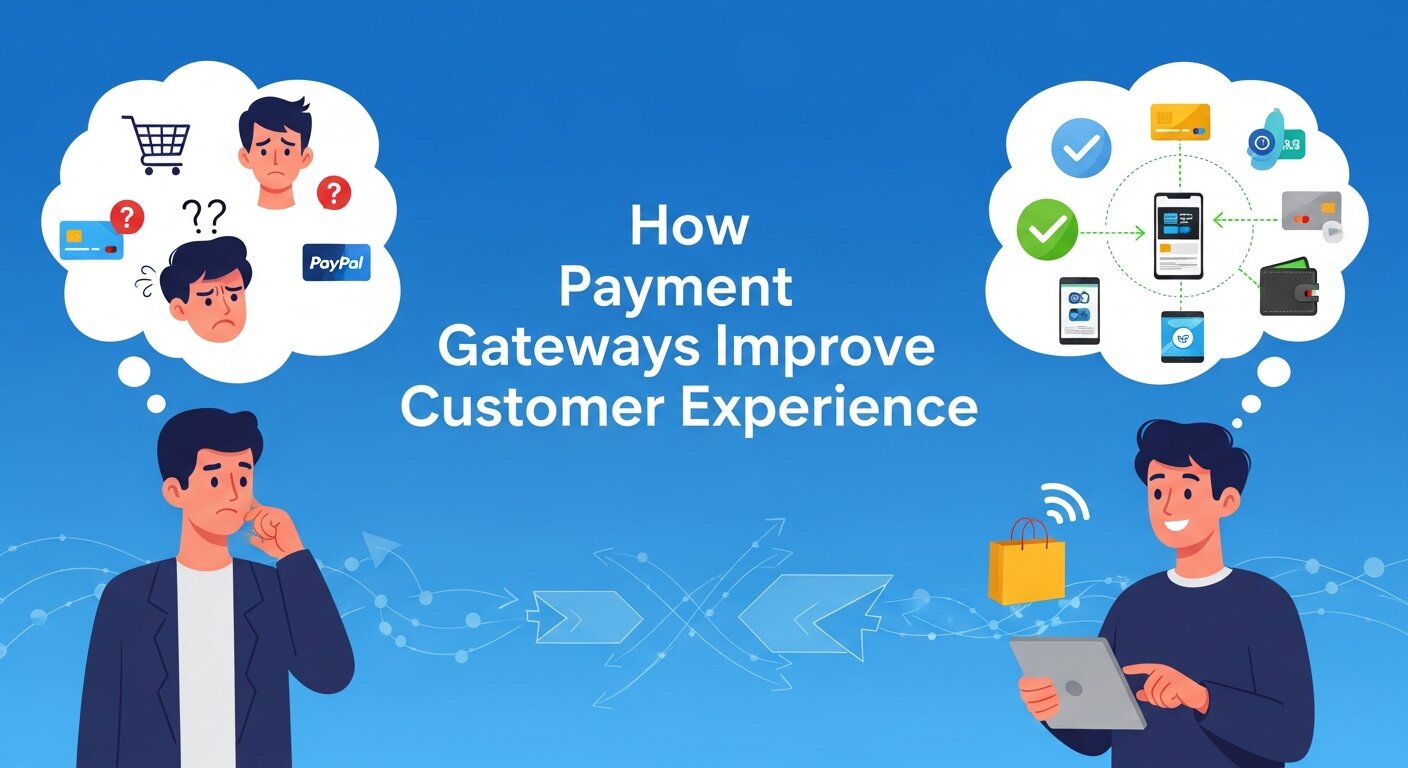 A smooth payment experience can have a direct impact on customer satisfaction and repeat purchases. Modern payment gateways allow customers to complete transactions quickly through familiar payment methods, including cards, digital wallets, and bank-based options. Mobile-friendly checkout is particularly important because customers increasingly make purchases from smartphones and tablets. Features such as saved payment details, express checkout, automatic error messages, and localized payment options can reduce unnecessary friction. A reliable gateway should also provide clear confirmation messages so customers know immediately whether their payment was successful. When businesses remove unnecessary steps from checkout while maintaining strong security, customers are more likely to complete purchases and return for future transactions.
How to Choose a Payment Gateway for E-Commerce Growth
Selecting a payment gateway should involve more than comparing transaction fees. Businesses need to consider their current sales volume, expected growth, target customers, preferred payment methods, and technical requirements. A small online store may prioritize easy setup and simple pricing, while a growing e-commerce business may require advanced APIs, recurring billing, fraud prevention, and multi-currency support. Scalability is also important because changing payment infrastructure later can be disruptive and expensive. Before making a decision, evaluate integration capabilities, security standards, payout schedules, reporting features, customer support, and the provider’s ability to operate in your target markets. Choosing a gateway that aligns with both current requirements and future expansion can help businesses avoid unnecessary technology changes as transaction volumes increase.
Best Practices for Managing Payment Gateway Performance
 Once a payment gateway is integrated, ongoing monitoring is essential to maintain reliable payment processing. Businesses should regularly review transaction success rates, declined payments, chargebacks, refund activity, and unusual transaction patterns. Testing the checkout process across different devices and browsers can also identify technical issues before they affect large numbers of customers. Keep gateway software, plugins, APIs, and security configurations updated to reduce vulnerabilities and compatibility problems. Businesses should also establish a clear process for handling failed payments and customer support requests. Regular performance reviews make it easier to identify recurring problems, improve authorization rates, and maintain a dependable checkout experience. Treating payment infrastructure as an ongoing business process—not a one-time technical installation—helps ensure that the system continues supporting growth efficiently.
Frequently Asked Questions
What is the difference between a payment gateway and a payment processor?
A payment gateway is the technology that captures and encrypts card data and sends it to the payment processor. The payment processor handles the actual transfer of funds between banks. Both are required for online payments, but they serve different roles. Many providers bundle both functions into a single solution.
How long does it take to integrate a payment gateway into a website?
Integration timelines vary depending on the gateway and your platform. A plugin-based integration with a platform like Shopify or WooCommerce can take a few hours. A custom API integration for a bespoke website may take several days to weeks, depending on your development team’s capacity and the gateway’s documentation quality.
Are payment gateway solutions safe for customers?
Yes, provided the gateway is PCI-DSS compliant and uses encryption and tokenization. These standards ensure that sensitive card data is protected during transmission and never stored in a vulnerable format. Customers transacting through a compliant gateway are well-protected against data theft.
What happens when a payment fails through a gateway?
A failed payment can result from insufficient funds, incorrect card details, fraud detection triggers, or a bank-side decline. The gateway returns a decline code, and the customer is typically prompted to try again or use a different payment method. Advanced gateways use smart routing to retry through alternative processors before returning a final decline.
Can a payment gateway handle subscriptions and recurring billing?
Yes. Many payment gateway solutions include recurring billing functionality, allowing businesses to charge customers automatically on a set schedule. This is particularly useful for subscription-based products or services. Look for gateways that support tokenization for stored cards, which enables secure recurring charges without requiring customers to re-enter their payment details.
How do payment gateway fees typically work?
Most gateways charge a per-transaction fee (a flat fee per payment, a percentage of the transaction value, or both) plus an optional monthly service fee. Some gateways also charge for additional features like fraud protection or multi-currency support. Always calculate your expected monthly costs based on realistic transaction volumes before committing to a provider.
Build a Payment Experience Your Customers Can Trust
Reliable online payment processing starts with the right foundation. Payment gateway solutions remove the complexity from financial transactions, giving your customers a seamless checkout experience while giving your business the security, visibility, and scalability it needs to grow.
If you’re evaluating payment gateways or looking to improve your current setup, SanMo BD can help you identify the right solution and implement it correctly from day one. The goal is simple: a payment process that works every time, for every customer, on every device.